Design generation from a prompt
Write one sentence — and get a finished layout with the composition, images and texts in place. Not a picture but a design: open it in the editor and refine it down to the last pixel.
Create a design from a descriptionA single story for a coffee shop: launch of the seasonal drink “Lavender Latte”, 20% off with the promo code LAVENDER, modern minimalism, warm pastel palette
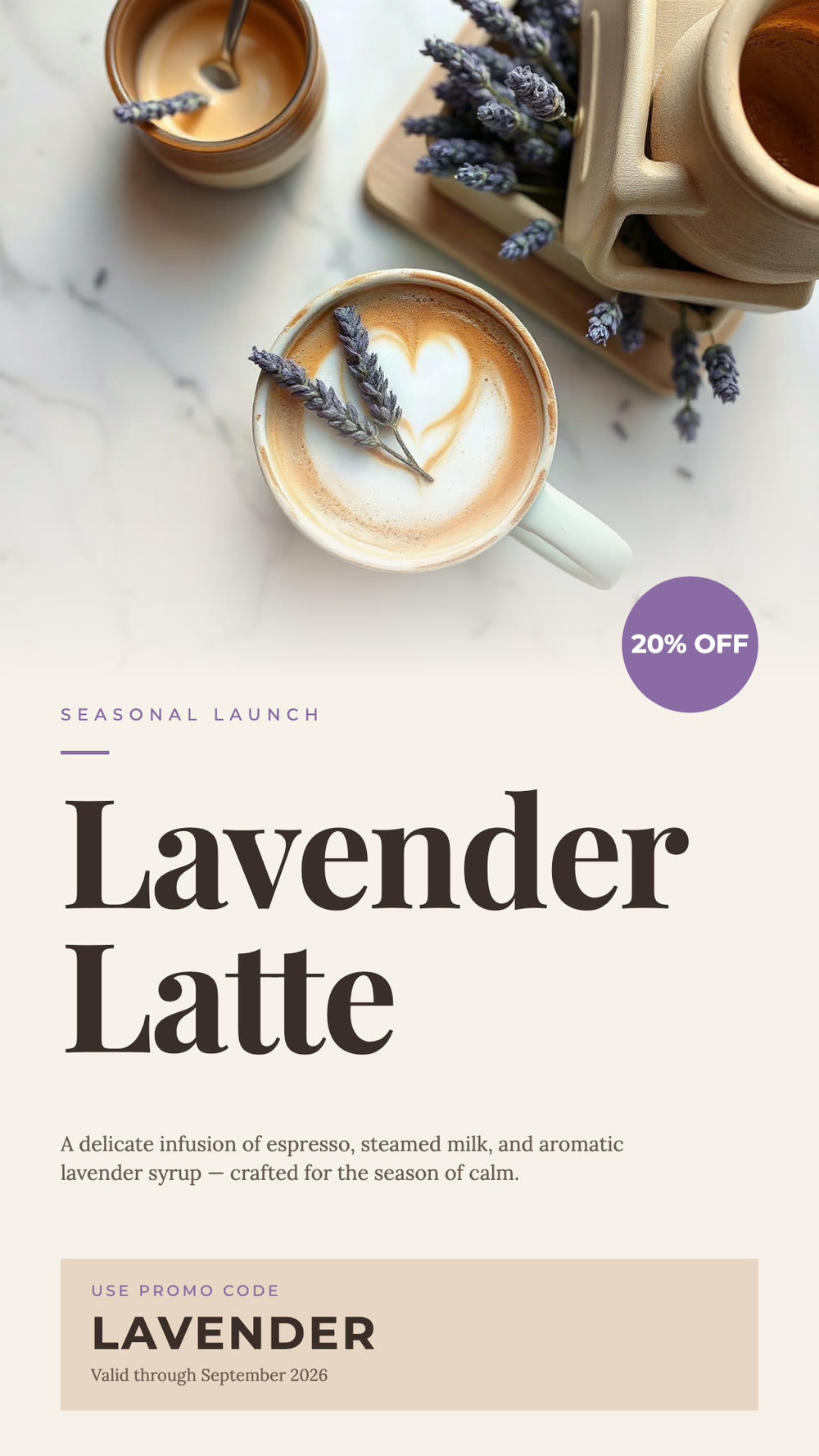
One sentence — a finished layout
Everything below was generated from the prompts printed under the layouts. Nothing was fixed by hand: not the composition, not the texts, not the images.
A single story for a coffee shop: launch of the seasonal drink “Lavender Latte”, 20% off with the promo code LAVENDER, modern minimalism, warm pastel palette
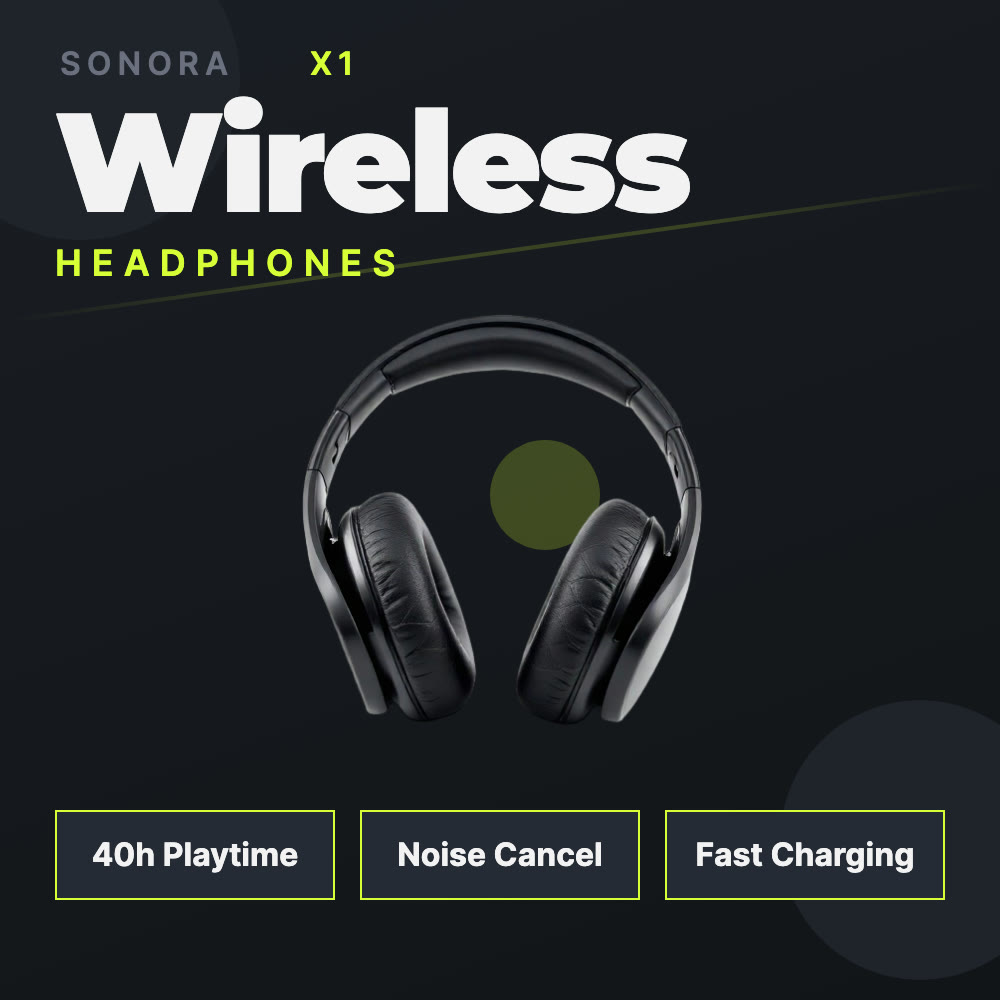
Marketplace product card: SONORA X1 wireless headphones in a matte graphite finish. A big title with the name, three short benefits as a list: 40 hours of playtime, active noise cancellation, fast charging. Clean modern style, dark background, lime accent color
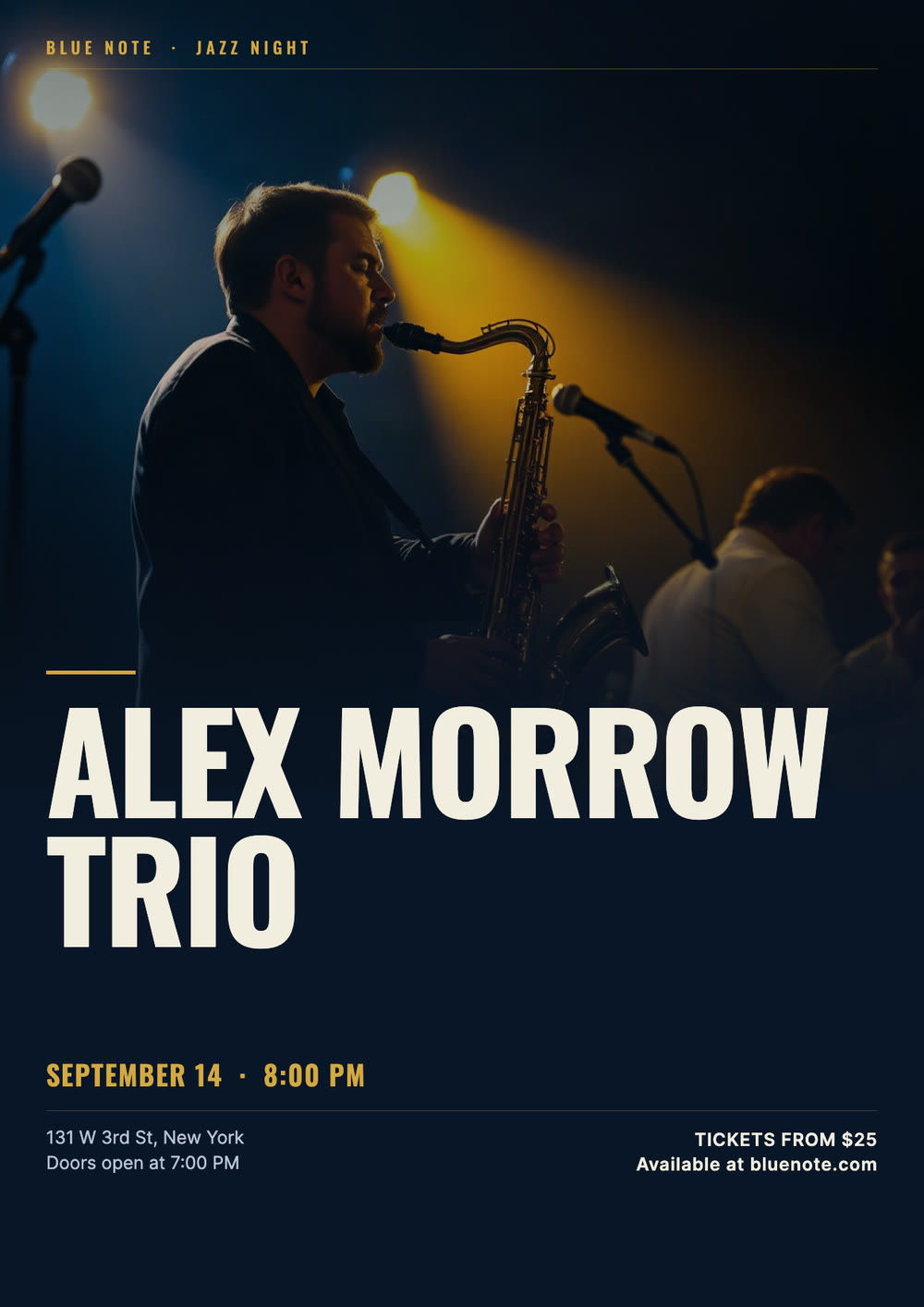
Poster for a jazz night at the BLUE NOTE club: September 14, 8 PM, the Alex Morrow Trio. An atmospheric photo of a saxophonist in warm stage light, deep navy background, big contrasting typography, golden accents, the address and tickets from $25 at the bottom
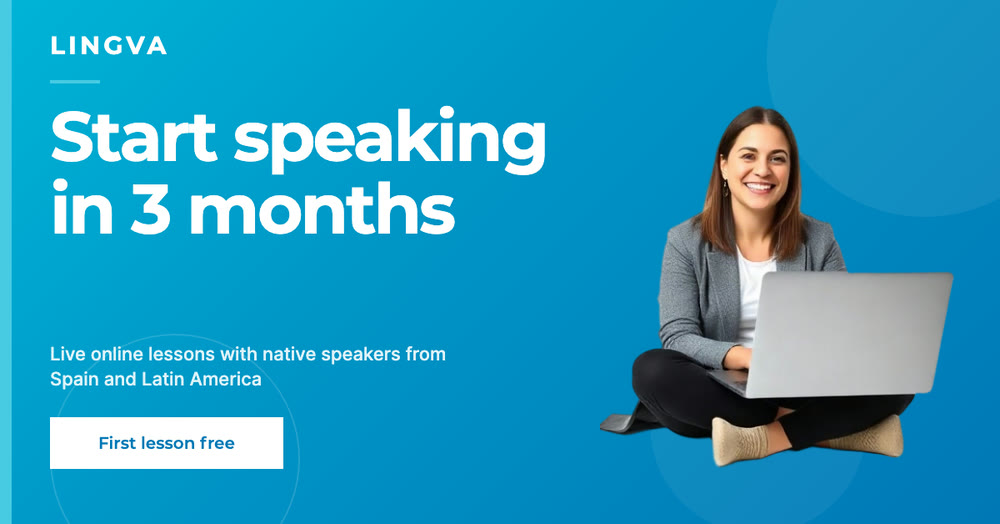
Horizontal web banner for LINGVA, an online Spanish school: headline “Start speaking in 3 months”, a subheading about lessons with native speakers, a “First lesson free” button. Fresh blue-turquoise gradient, geometric decor, a photo of a smiling girl with a laptop
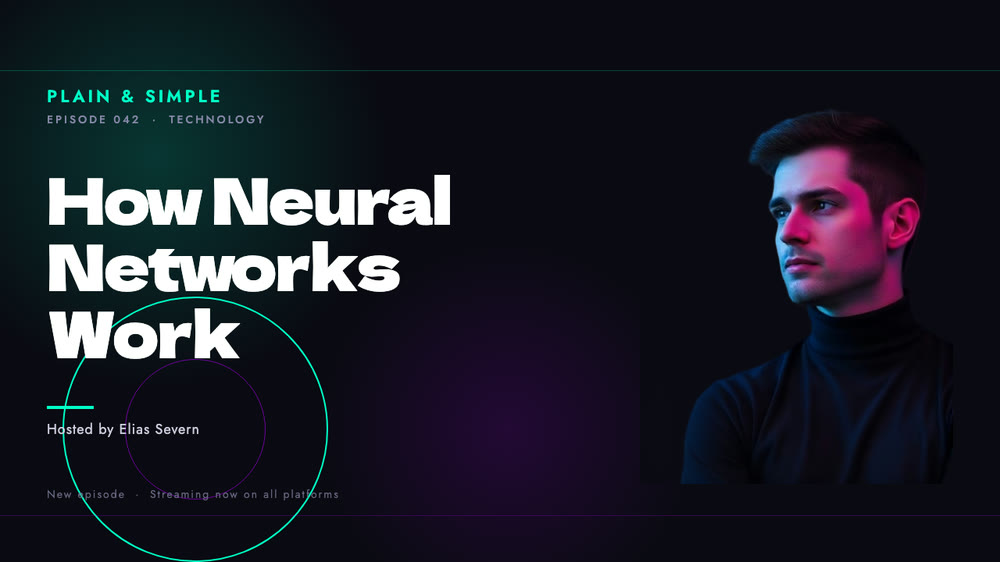
Podcast episode cover for “Plain & Simple”: episode topic “How neural networks work”, episode number 42, host name Elias Severn. Contrasting dark composition, big headline, abstract neon graphics, the host's portrait on the right
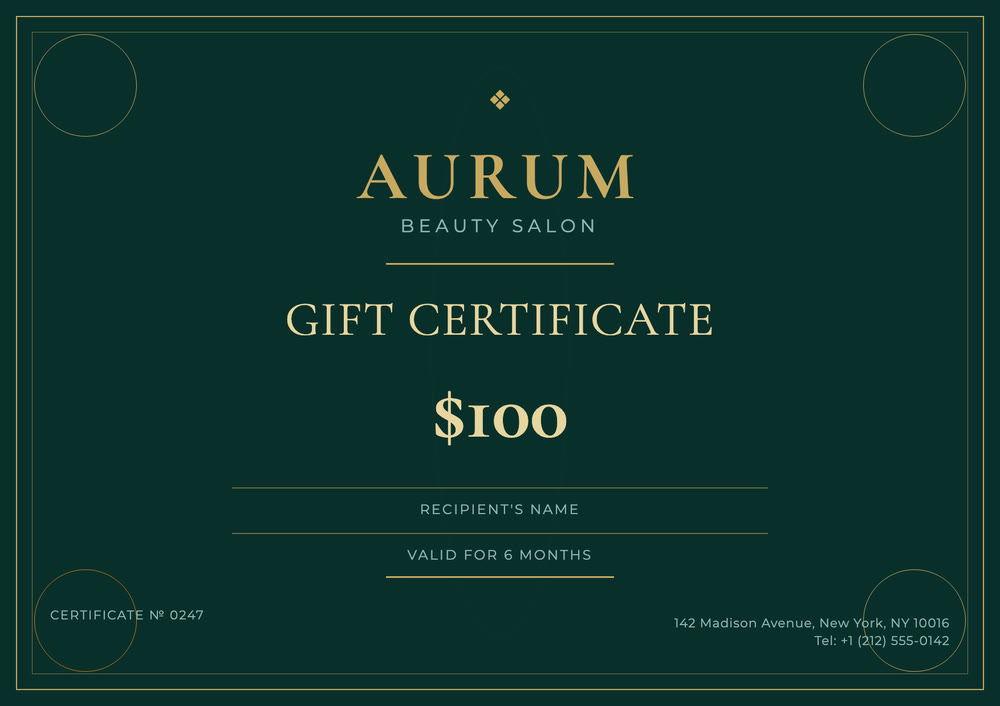
Gift certificate for the AURUM beauty salon worth $100: a place for the recipient's name, valid for 6 months, a certificate number, the salon address. Elegant dark emerald background, thin golden lines and flourishes, refined classic typography
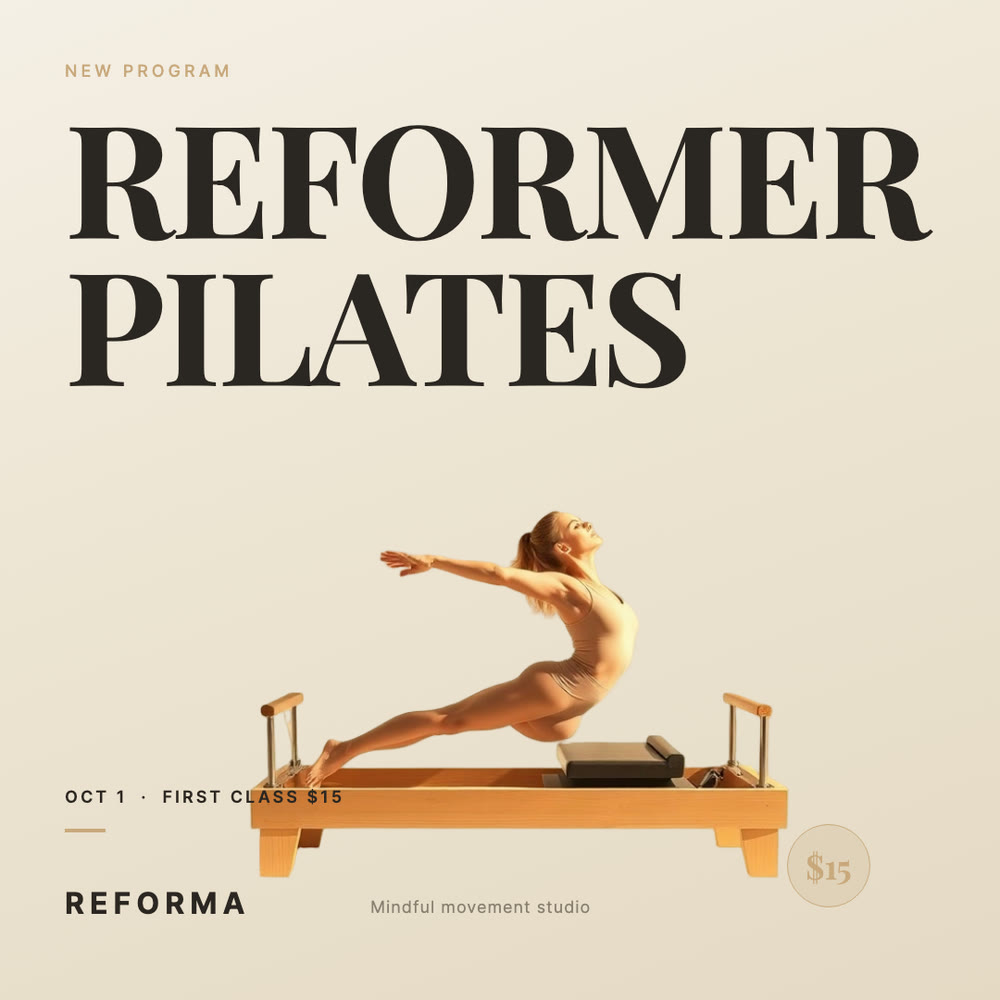
Social post for the REFORMA fitness studio: announcing the new “Reformer Pilates” program, starts October 1, first class $15. Light minimalist composition, a photo of a girl on a reformer, warm sand palette, neat typography
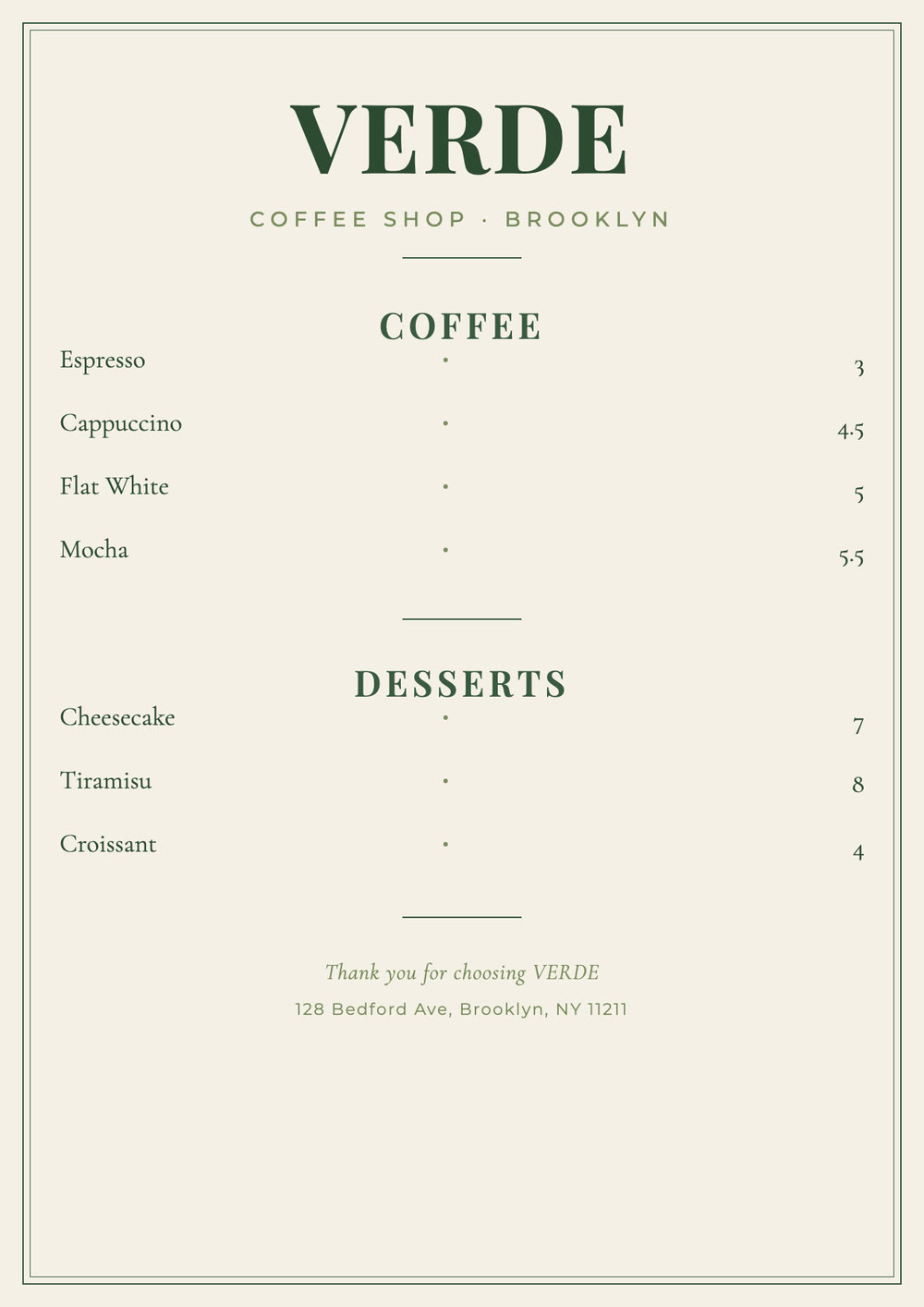
A4 menu for the VERDE coffee shop. On top the name VERDE and the line “coffee shop · Brooklyn”. Section “Coffee”: espresso 3, cappuccino 4.5, flat white 5, mocha 5.5. Section “Desserts”: cheesecake 7, tiramisu 8, croissant 4. Rows with dotted leaders up to the price. Light paper background, elegant typography, a thin border around the page
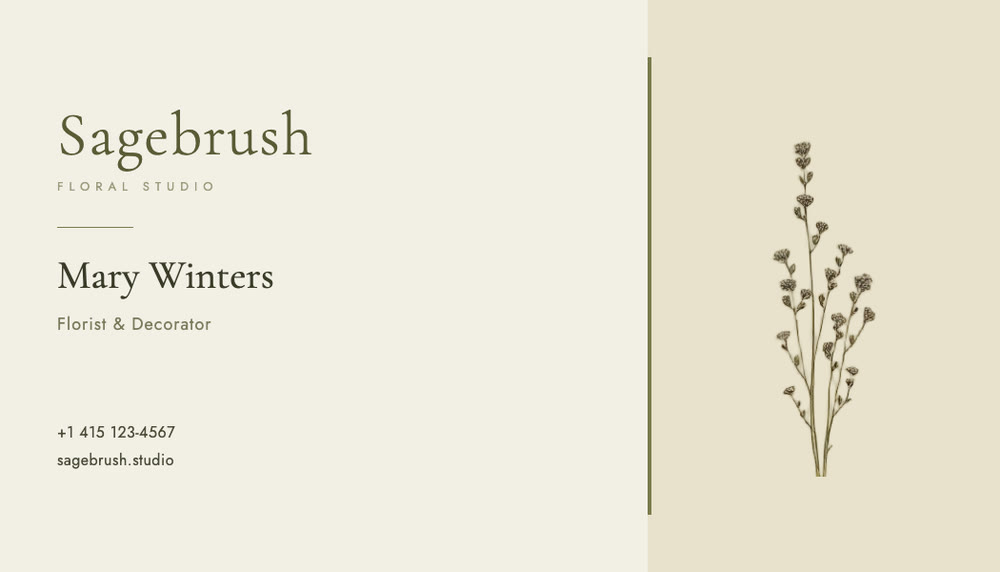
Business card for the Sagebrush floral studio: name Mary Winters, florist and decorator, phone +1 415 123-4567, website sagebrush.studio. Minimalist light design, thin line art, dried herbs, calm olive-beige palette
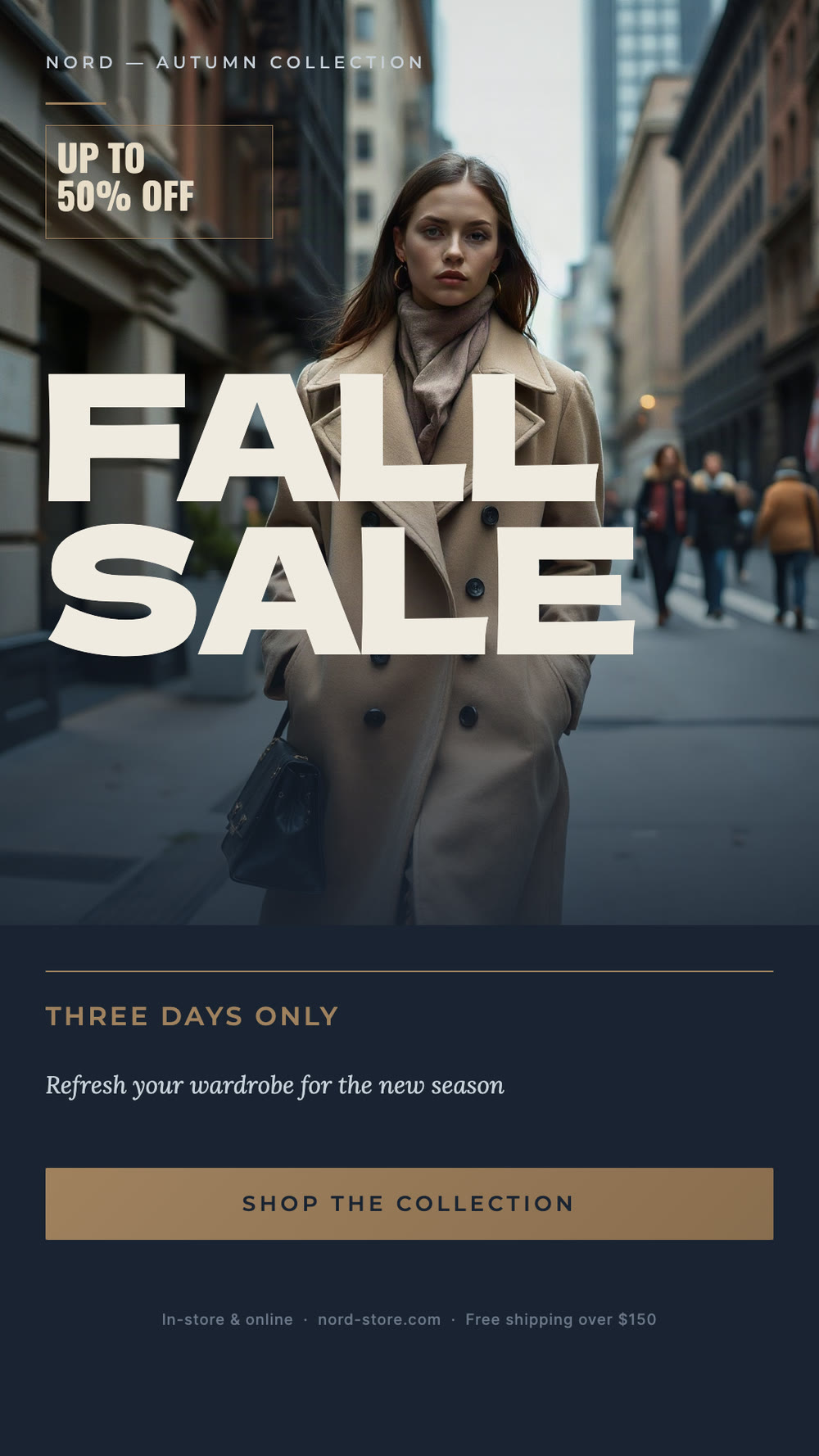
Story for the NORD clothing store: fall sale, up to 50% off, three days only. Big fashion typography, a photo of a girl in a beige coat on a city street, cool restrained palette, a “Shop the collection” button at the bottom

Wide social community cover: the Clay & Light ceramics studio, handmade tableware and workshops in Portland. A big name and one tagline line on the left, a photo of handmade ceramic bowls on the right. Warm terracotta-sand palette, calm minimalism
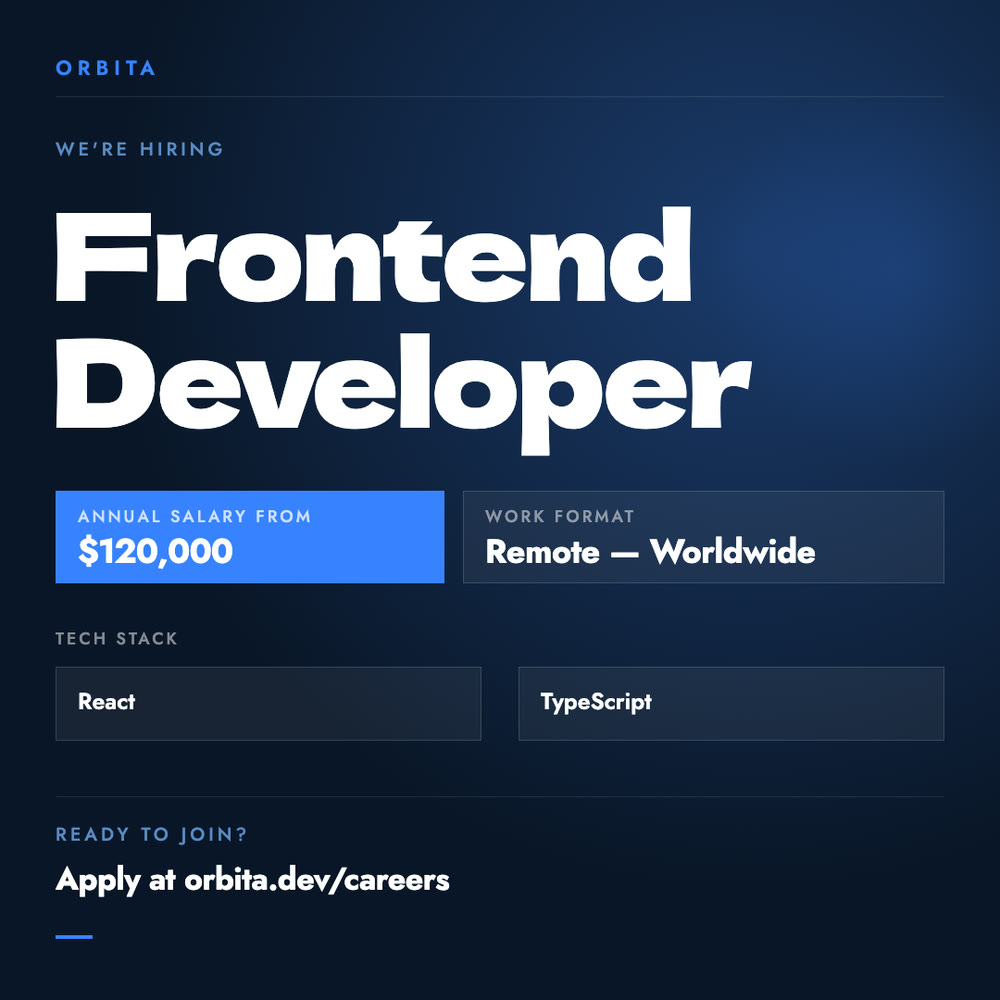
Job opening post for ORBITA, an IT company: hiring a frontend developer, remote, from $120,000 a year, React and TypeScript stack, a call to apply at the bottom. Clean modern style, deep blue background, large typography, neat plates with the terms
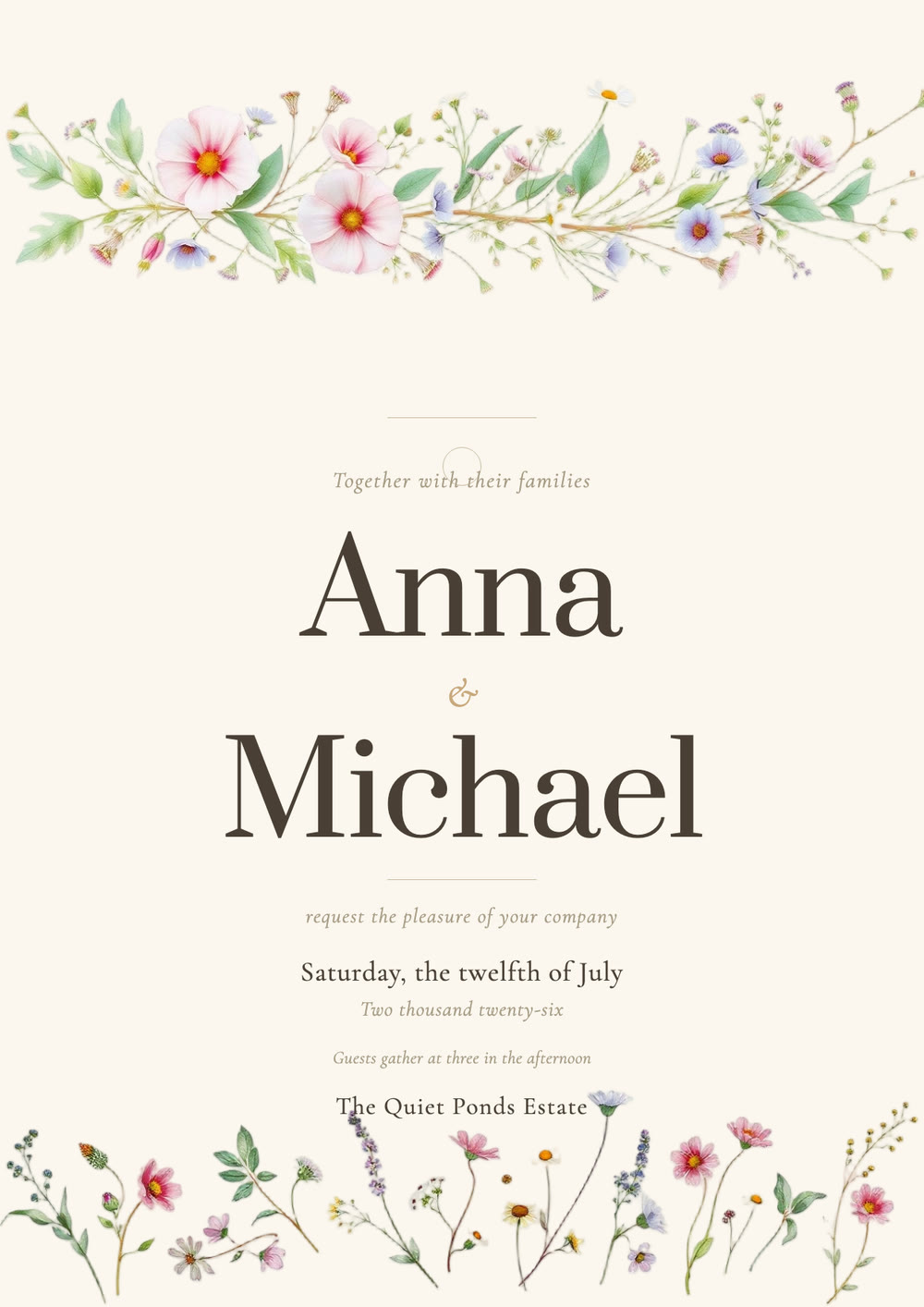
Wedding invitation for Anna and Michael: July 12, 2026, the Quiet Ponds estate, guests gather at 3 PM. Delicate light design, watercolor wildflowers along the edges, thin lines, elegant calligraphic typography, nothing overlaps the text
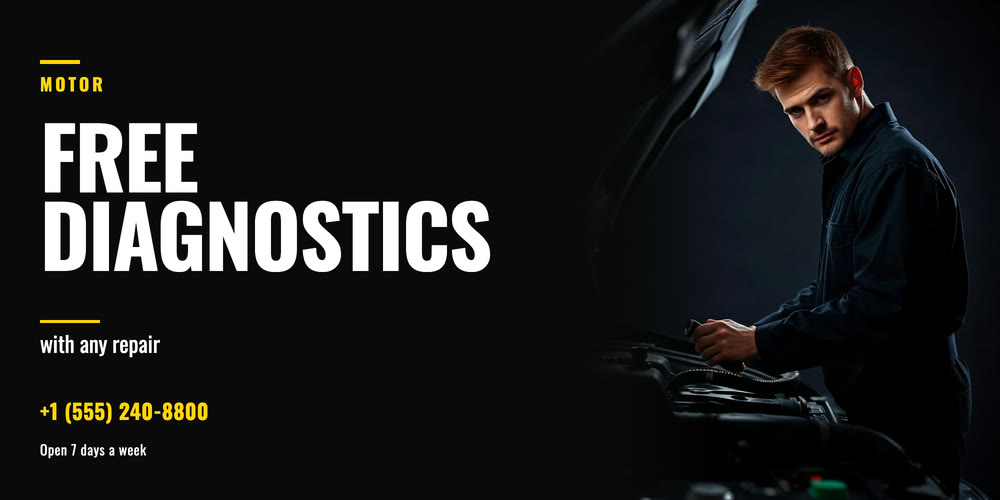
Outdoor ad for the MOTOR auto service: one big phrase “Free diagnostics”, below it “with any repair”, then the phone number and “open 7 days a week”. Very short text readable from afar: dark background, bright yellow accent, a photo of a mechanic on the right
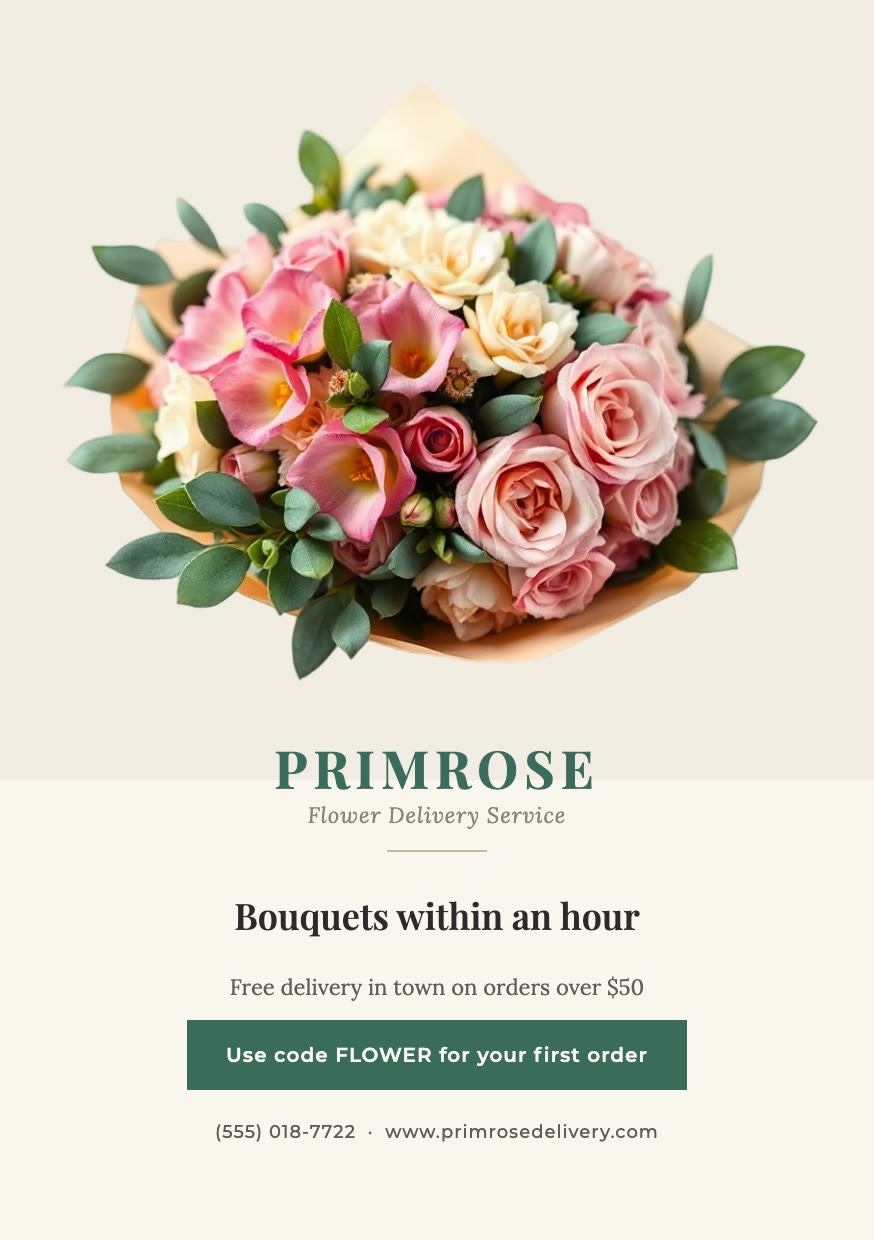
A5 flyer for the Primrose flower delivery service: bouquets within an hour, free delivery in town on orders over $50, the promo code FLOWER for the first order, phone and website. Light composition, a large bouquet photo on top, a neat block with the terms below
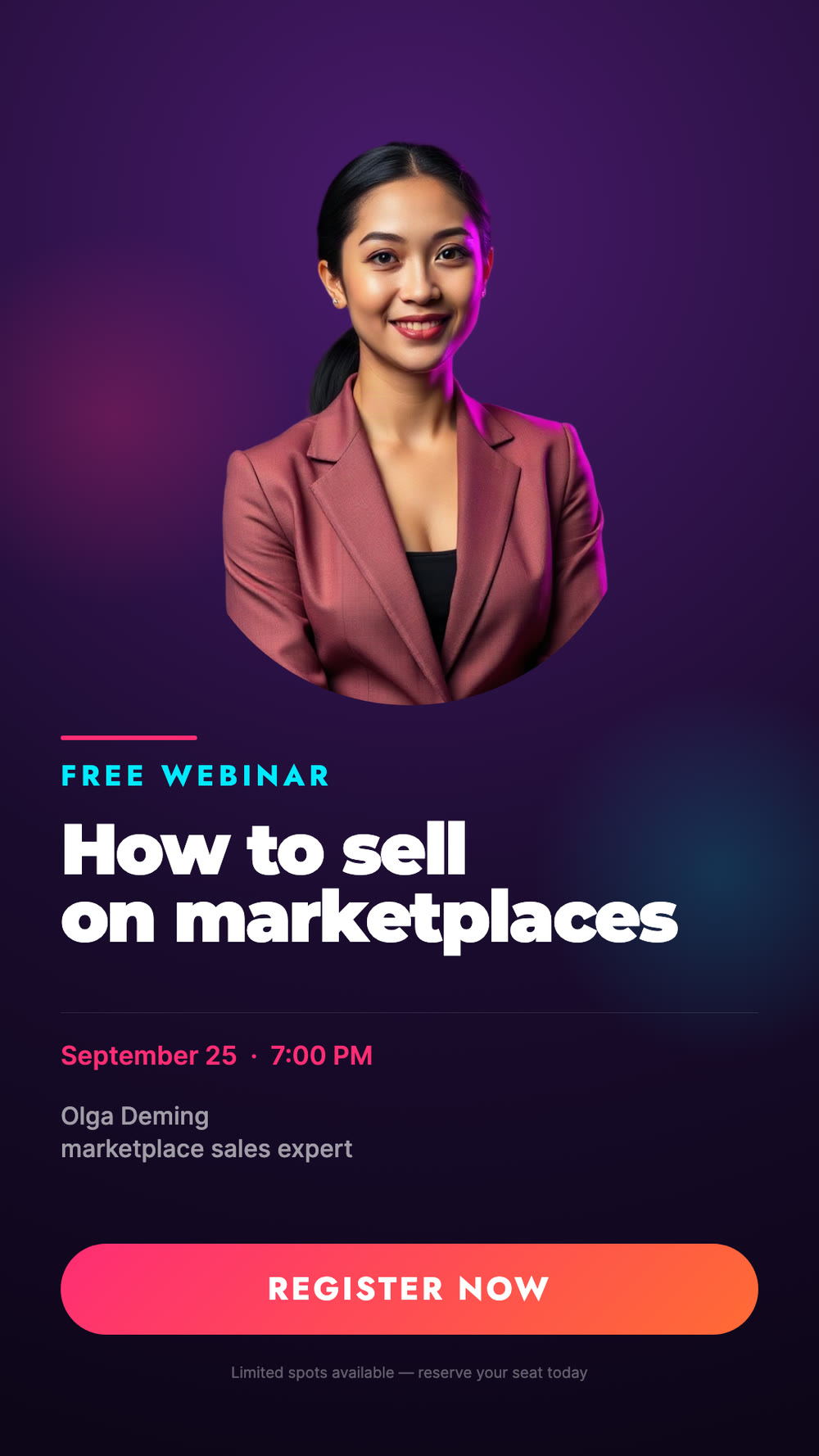
Story announcing the free webinar “How to sell on marketplaces”: September 25 at 7 PM, speaker Olga Deming — a marketplace sales expert, a “Register” button at the bottom. Modern contrasting design, dark purple background, bright accents, the speaker's portrait
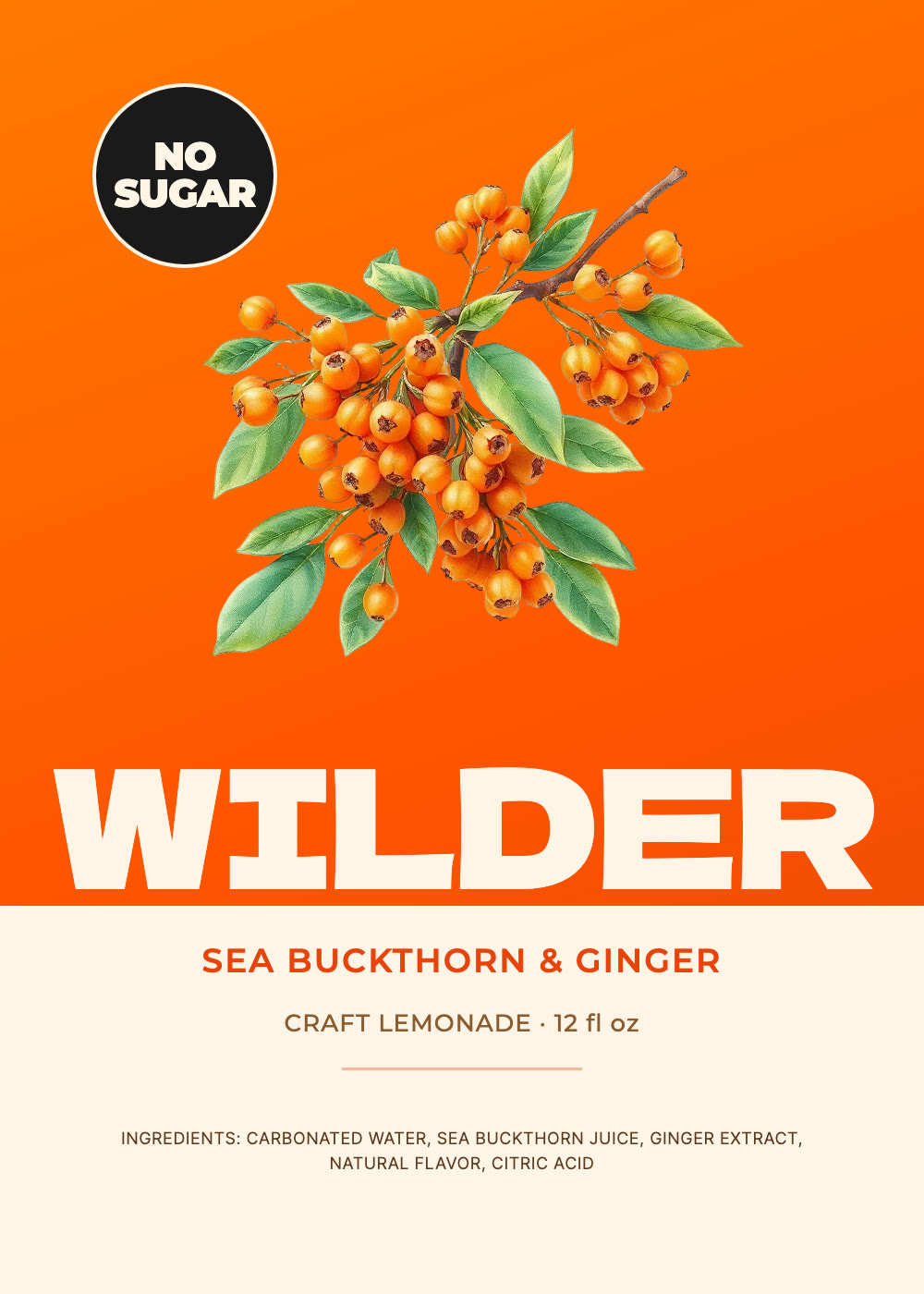
Label for the WILDER craft lemonade with sea buckthorn and ginger: volume 12 fl oz, the ingredients and the words “no sugar”. Bright modern design, juicy orange color, a big name, a berry illustration, a neat block of small text at the bottom
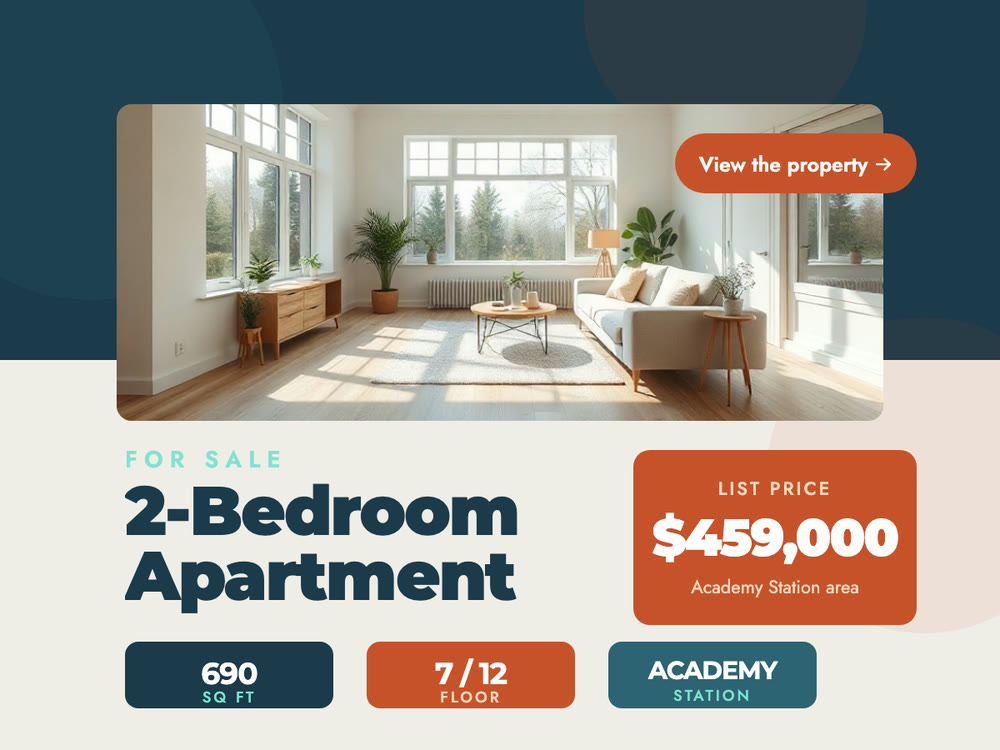
Real estate listing card: a two-bedroom apartment, 690 sq ft, 7th floor of 12, next to Academy Station, $459,000. Light clean design, a big photo of a bright living room, three plates with key facts, a “View the property” button
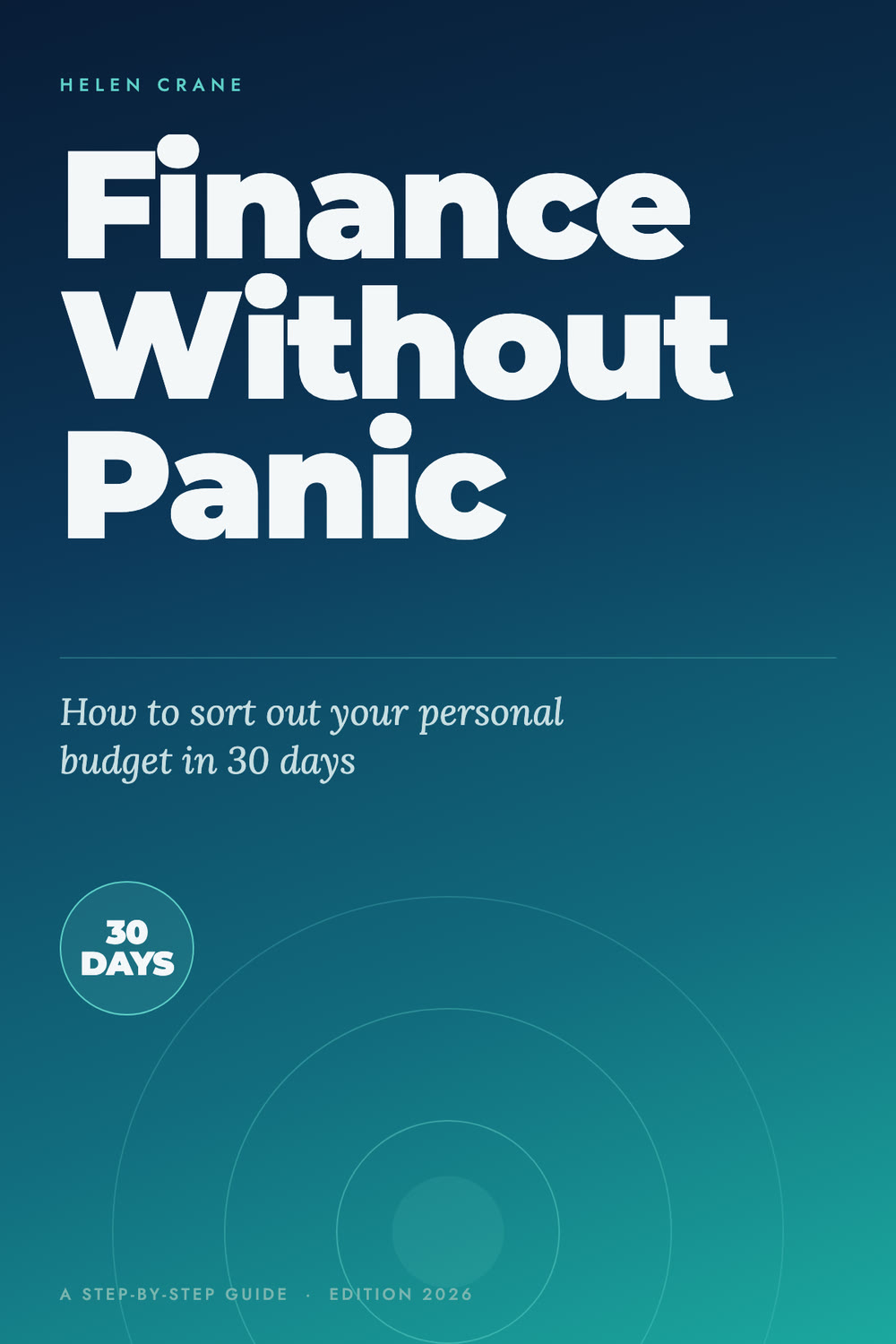
E-book cover “Finance Without Panic” by Helen Crane: subtitle “How to sort out your personal budget in 30 days”. A calm gradient from deep blue to turquoise, big strict typography, a minimalist geometric illustration
Not one layout but a whole series
Ask for a presentation, a carousel or a set of cards — and get all the slides at once. The first one sets the palette, fonts, type sizes and margins; the rest inherit them without repeating the arrangement: the series reads as one whole, not one layout copied over and over.
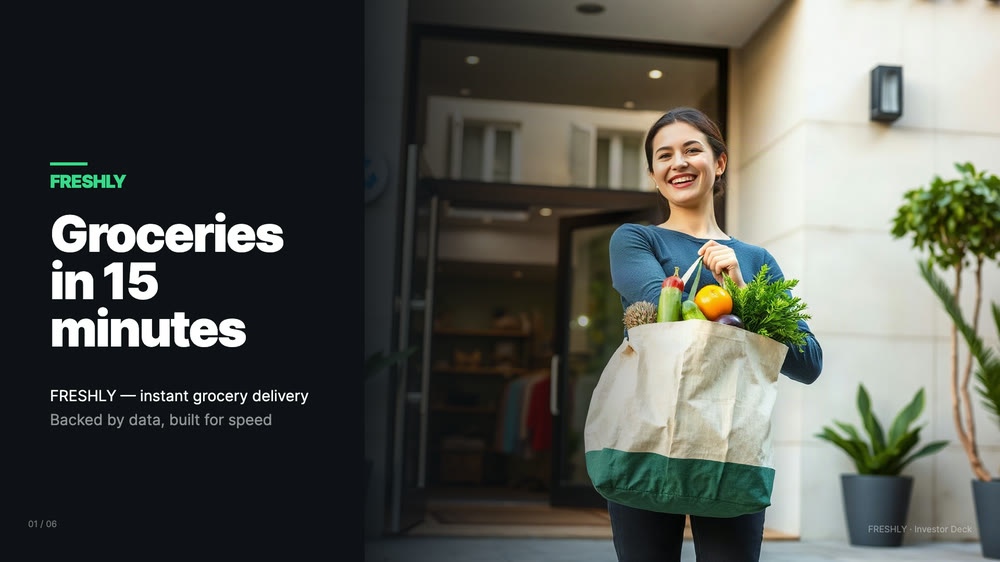
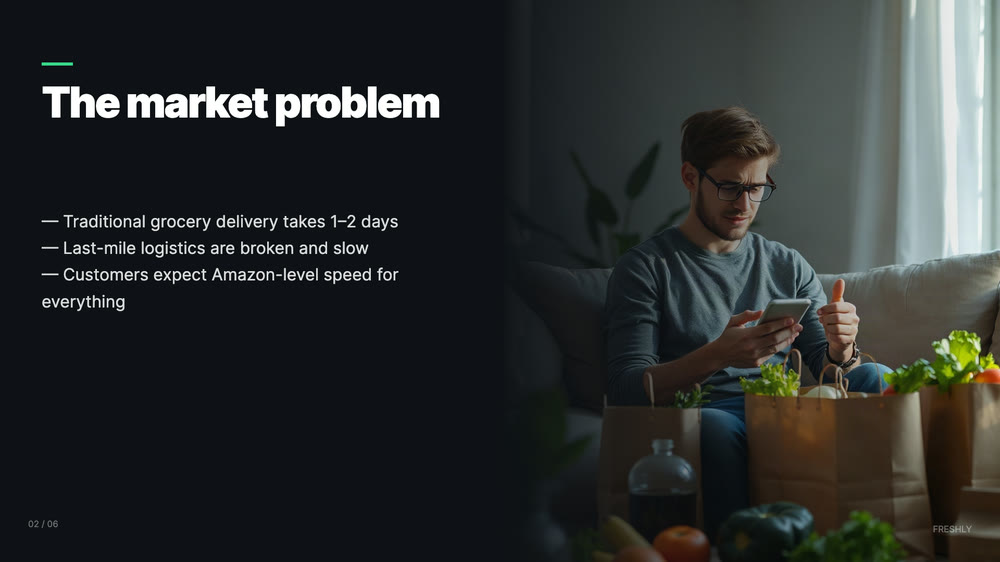
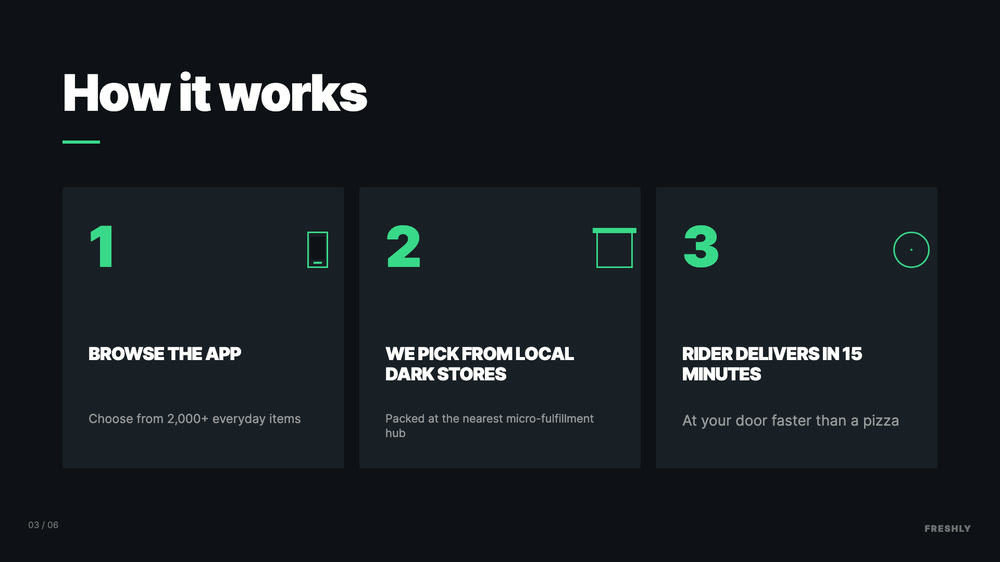
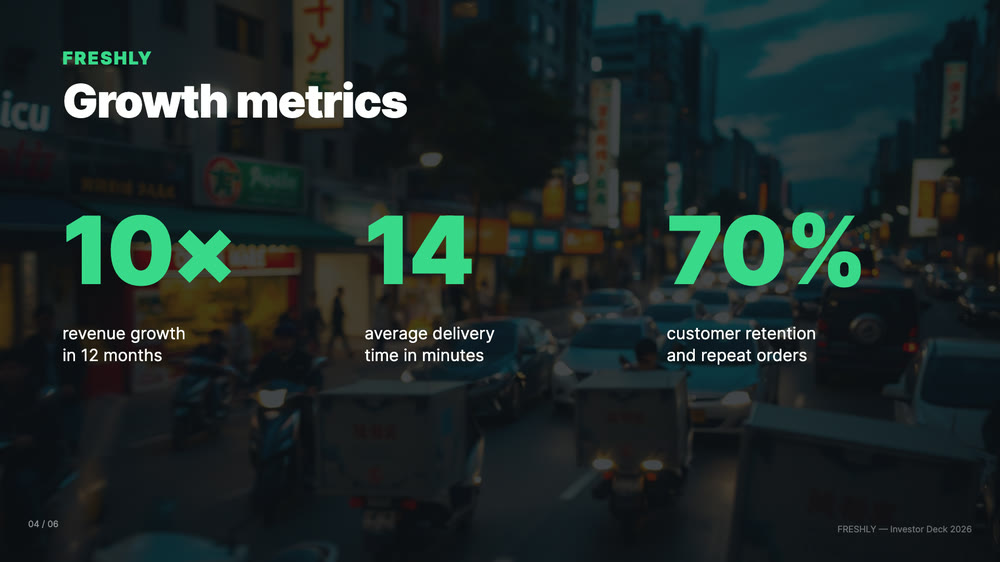
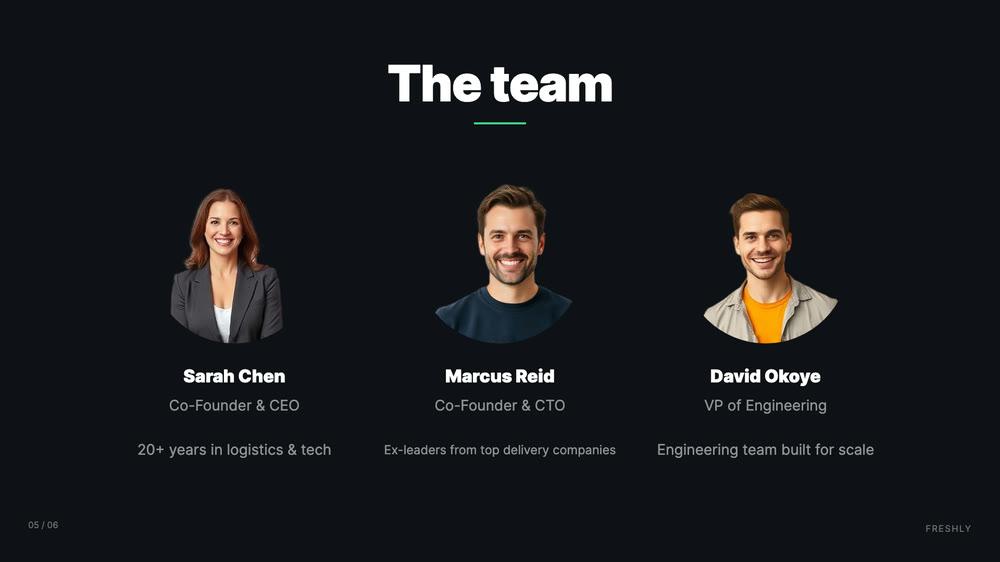
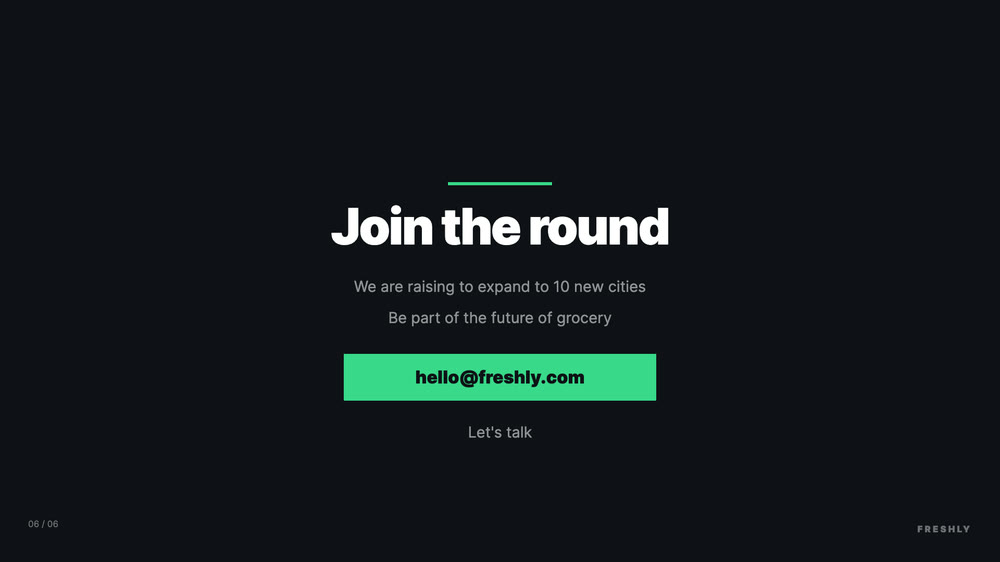
Investor deck for FRESHLY, a 15-minute grocery delivery service, six slides: the cover “Groceries in 15 minutes”, then “The market problem”, “How it works”, “Growth metrics”, “The team” and a closing call to join the round
Six slides: how many it takes to cover the topic, the service decided on its own. Name a number in the prompt — and you'll get exactly that many.
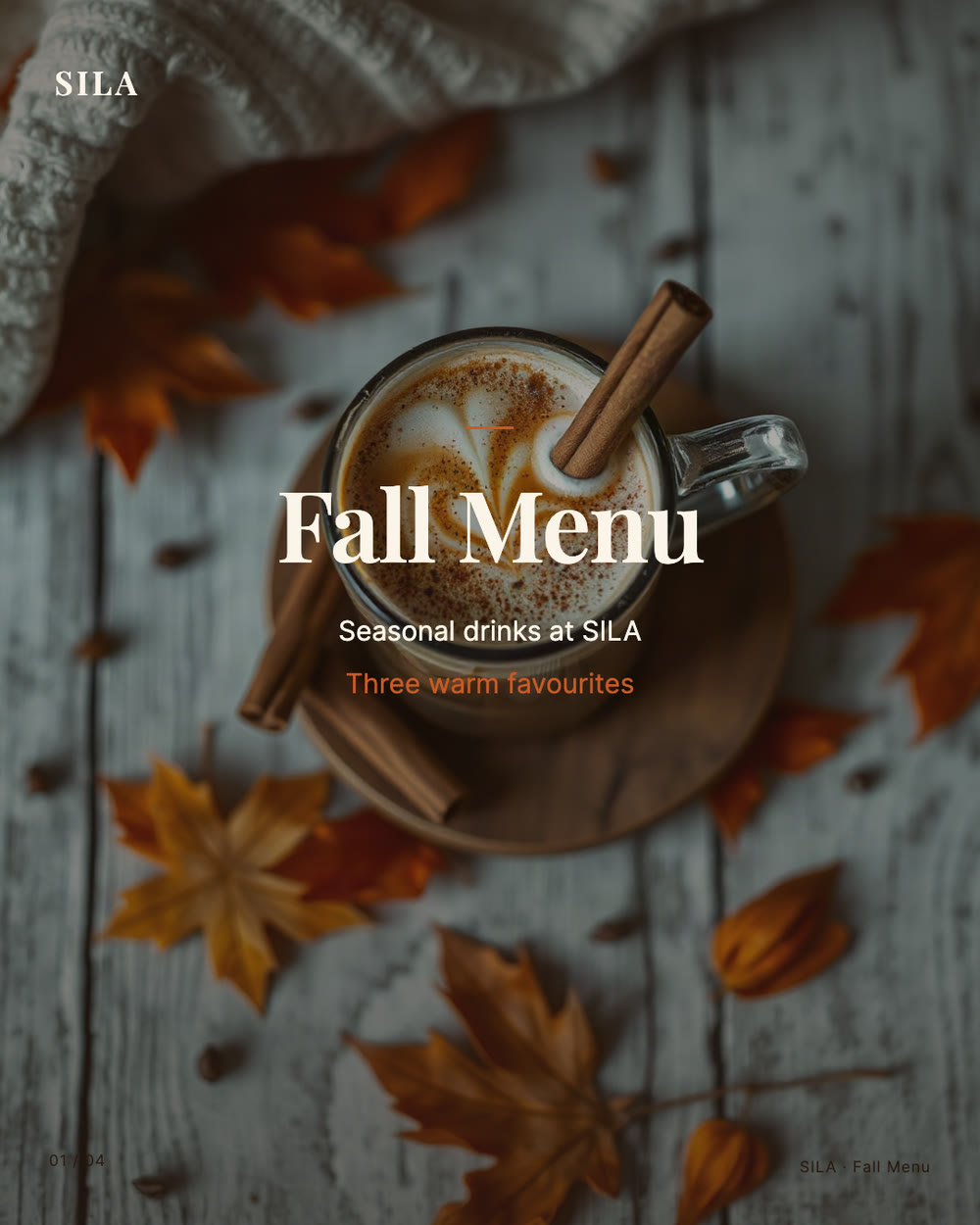
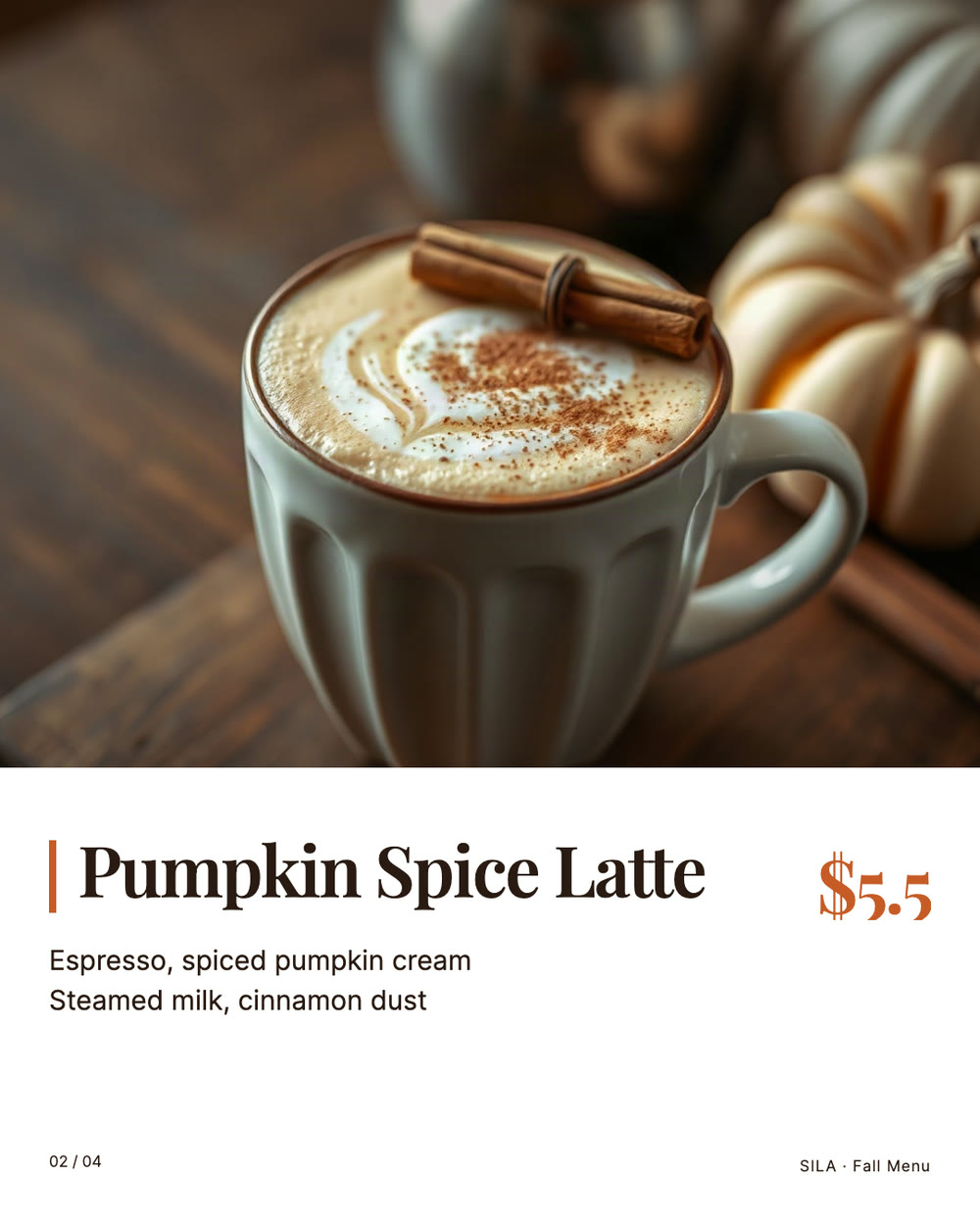
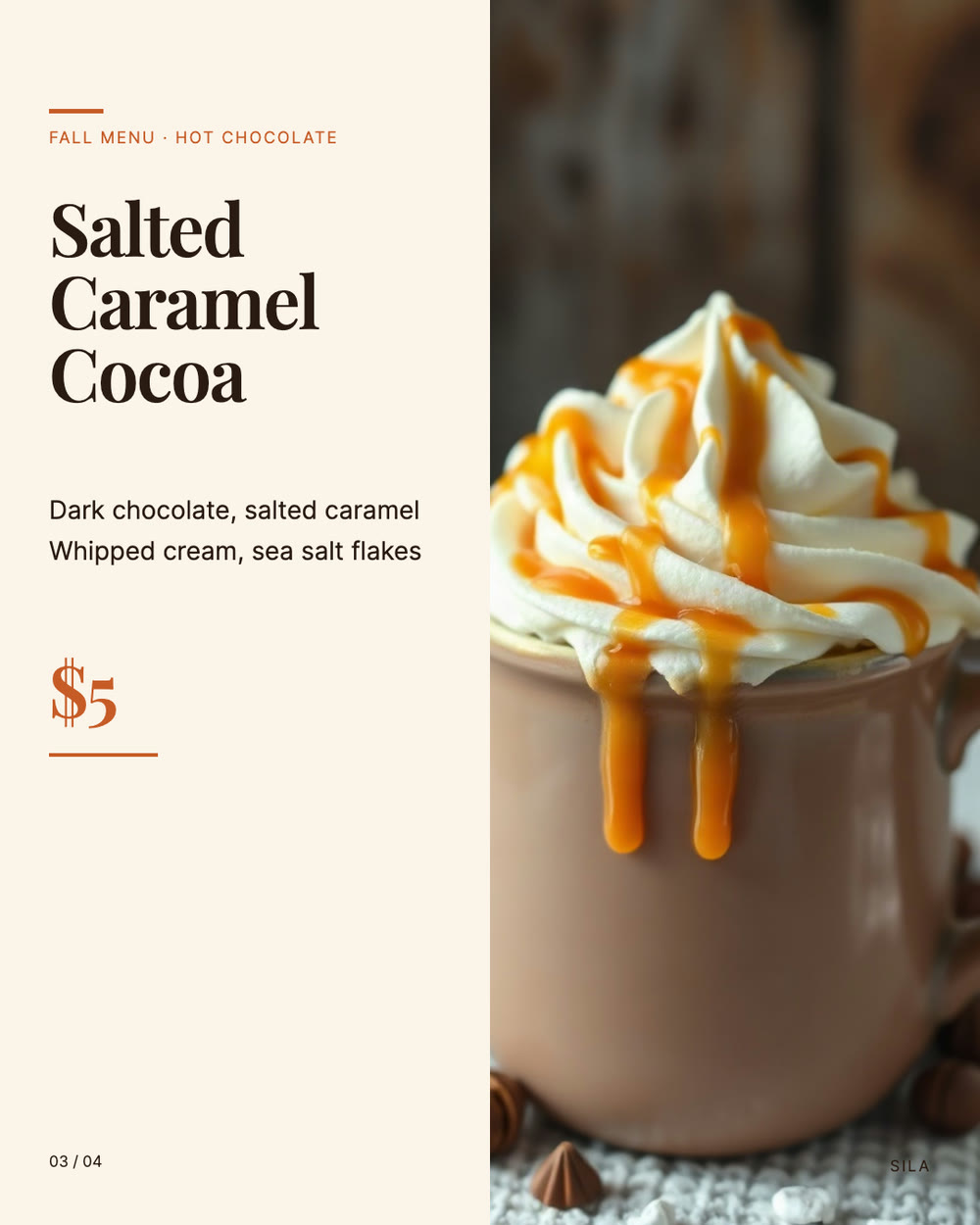
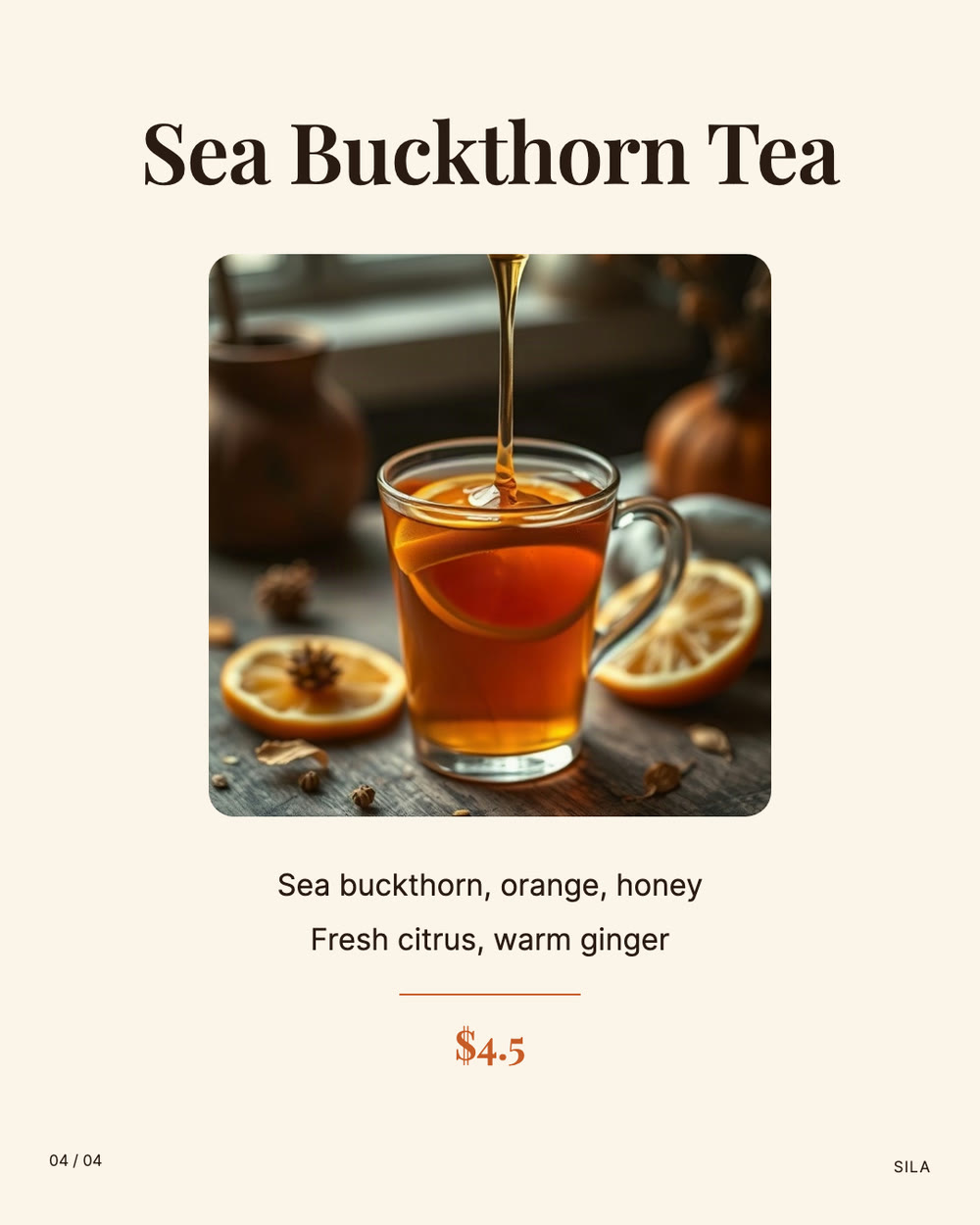
Carousel of 4 cards for the SILA coffee shop's social feed: a cover “Fall menu”, then three drink cards — pumpkin spice latte $5.5, salted caramel cocoa $5, sea buckthorn tea $4.5. Each with an appetizing photo, name, description and price
A cover and three drink cards: each has its own composition, while the palette, fonts and margins are shared across the series.
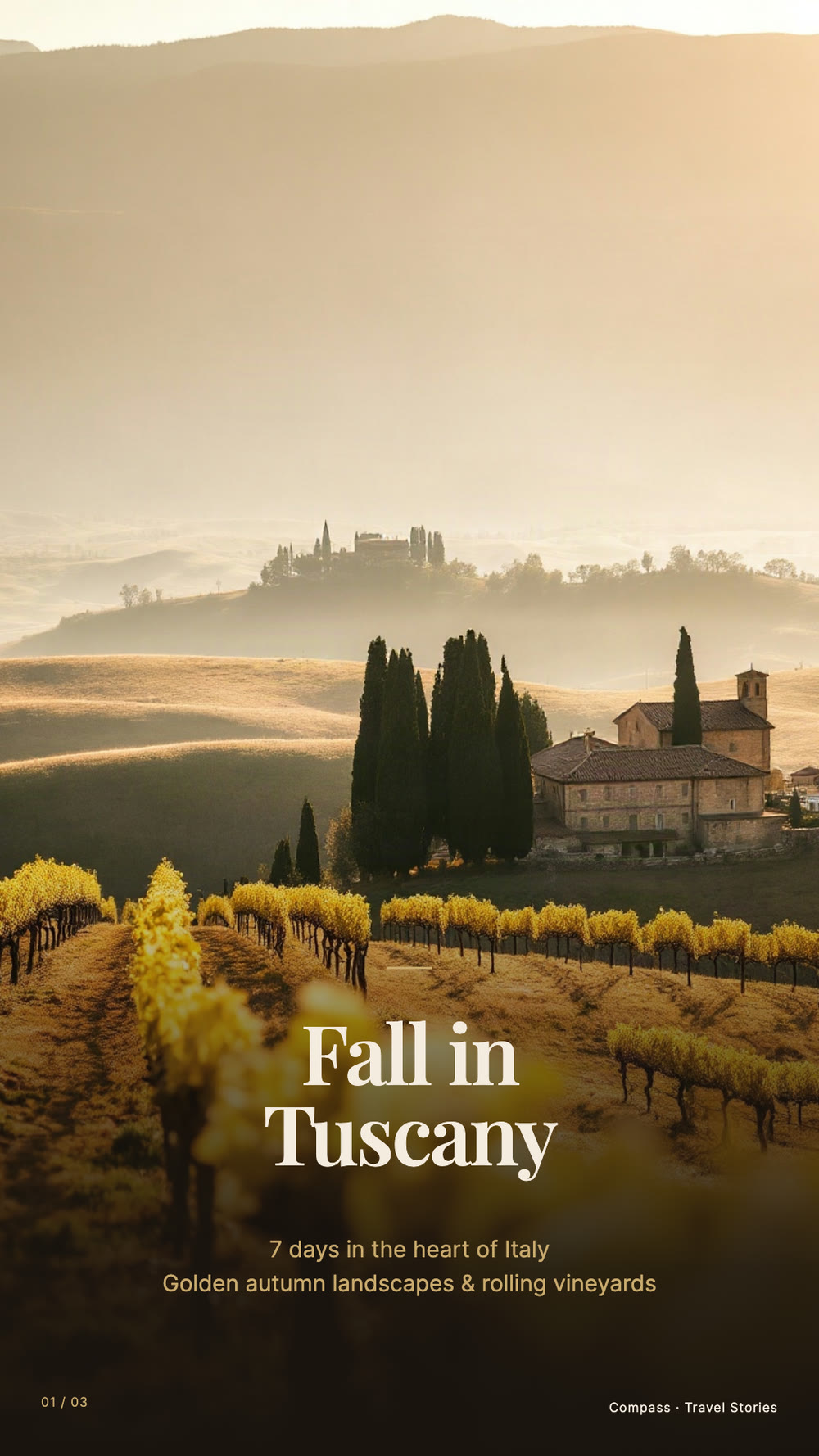
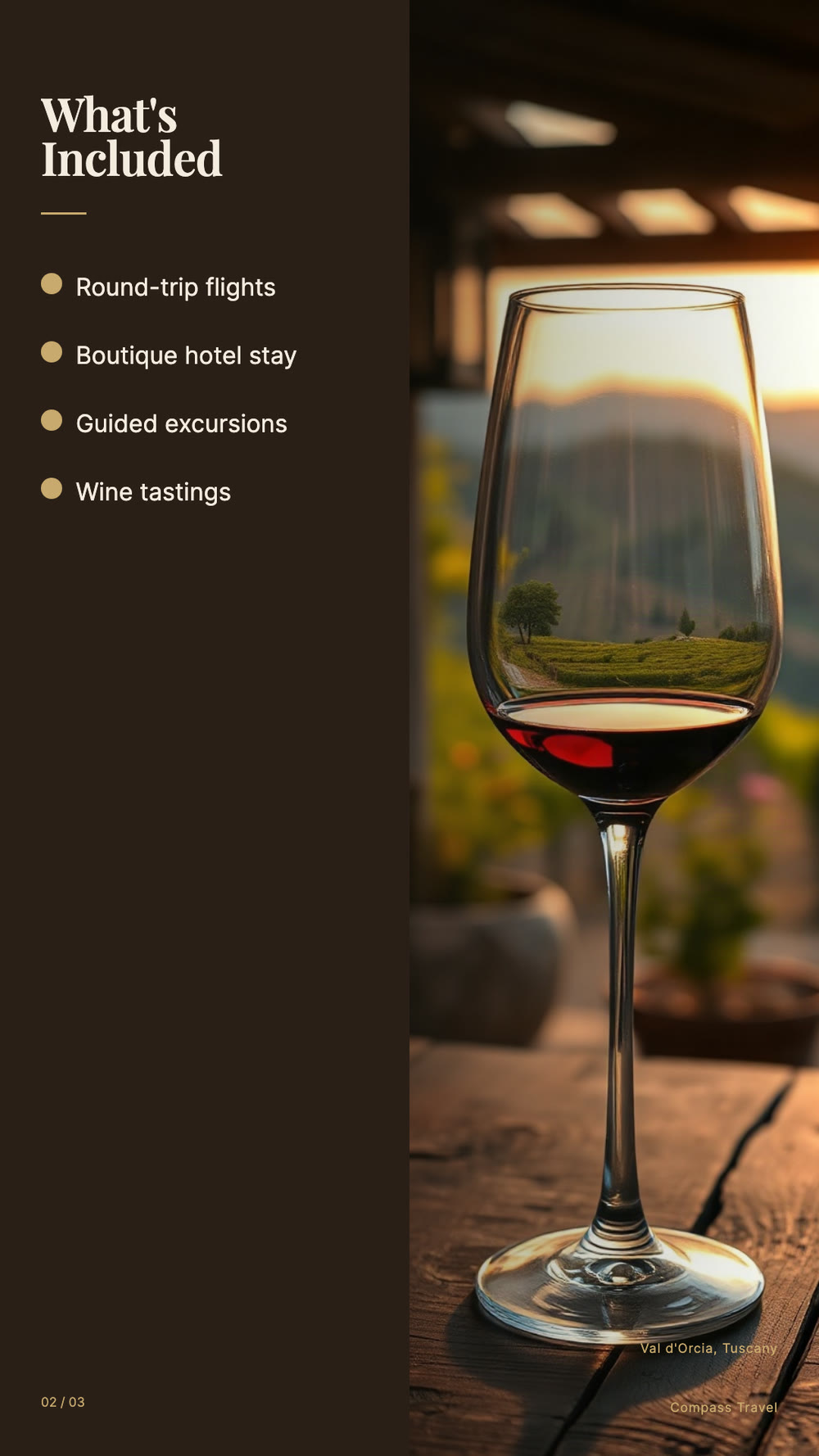
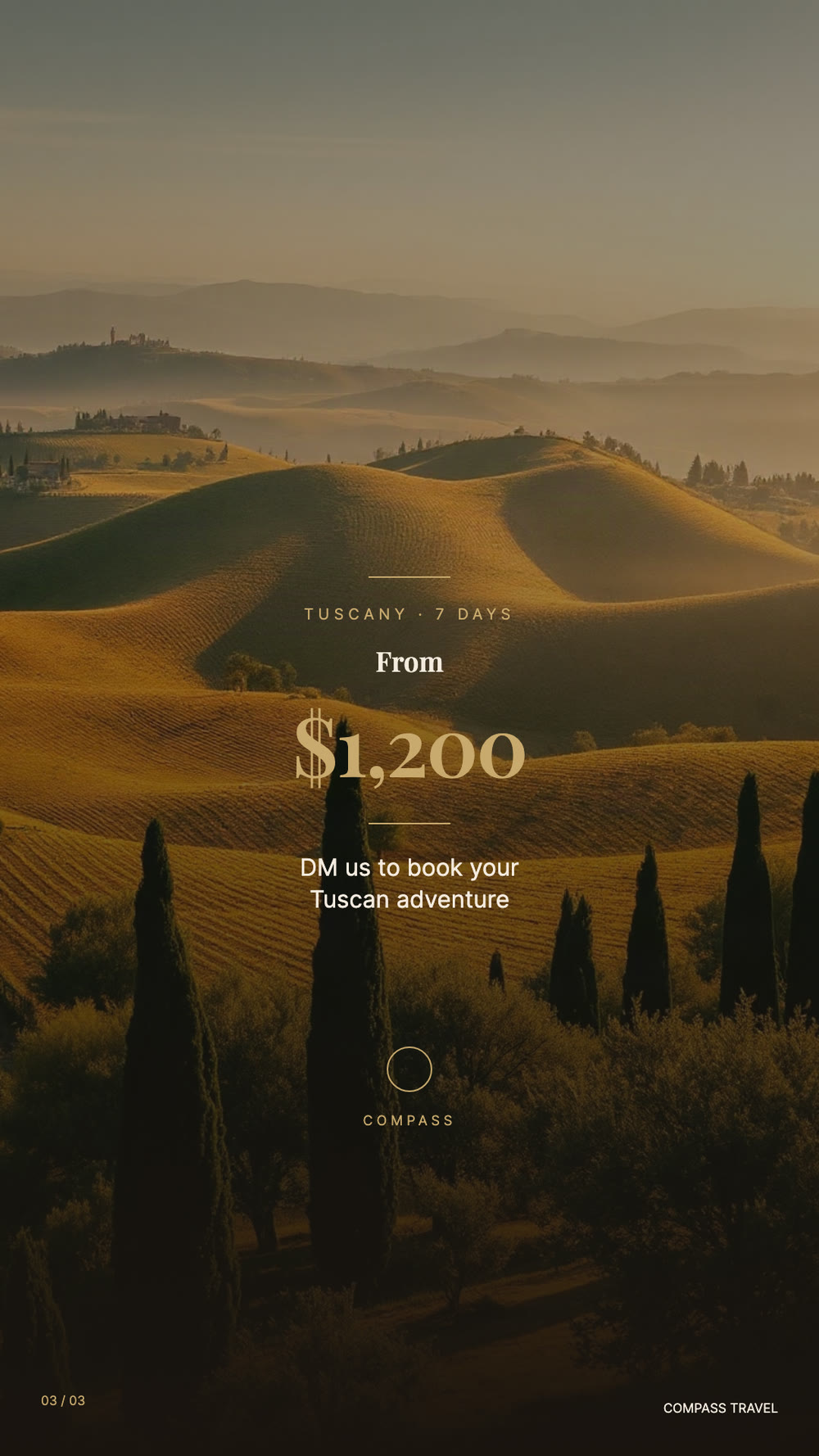
Series of 3 stories for the Compass travel agency: first — “Fall in Tuscany, 7 days”, second — what the tour includes: flights, hotel, excursions, wine tastings, third — price from $1,200 and a call to DM us
A series can be vertical too: the teaser, the tour contents and the price — three stories in a row, watched one after another.
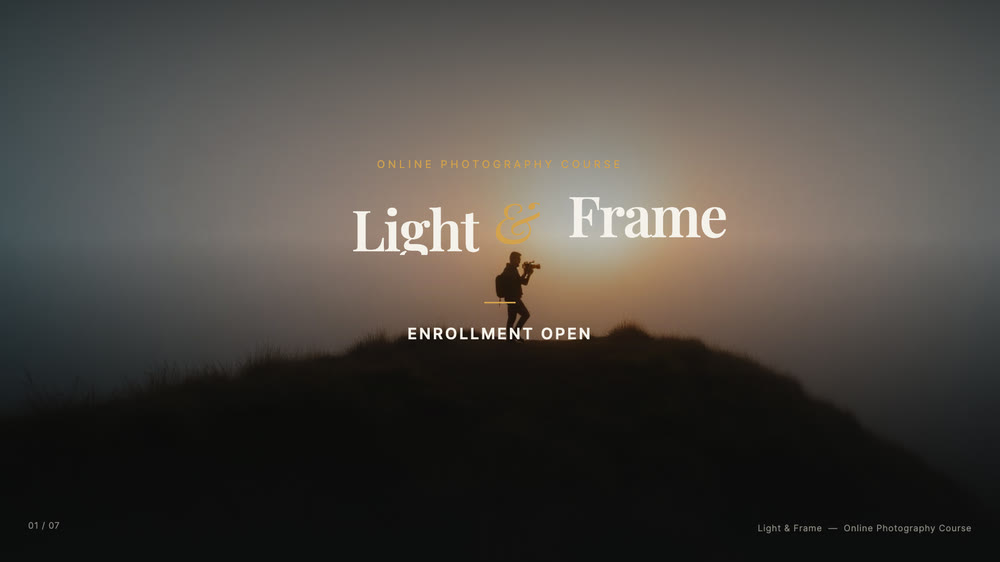
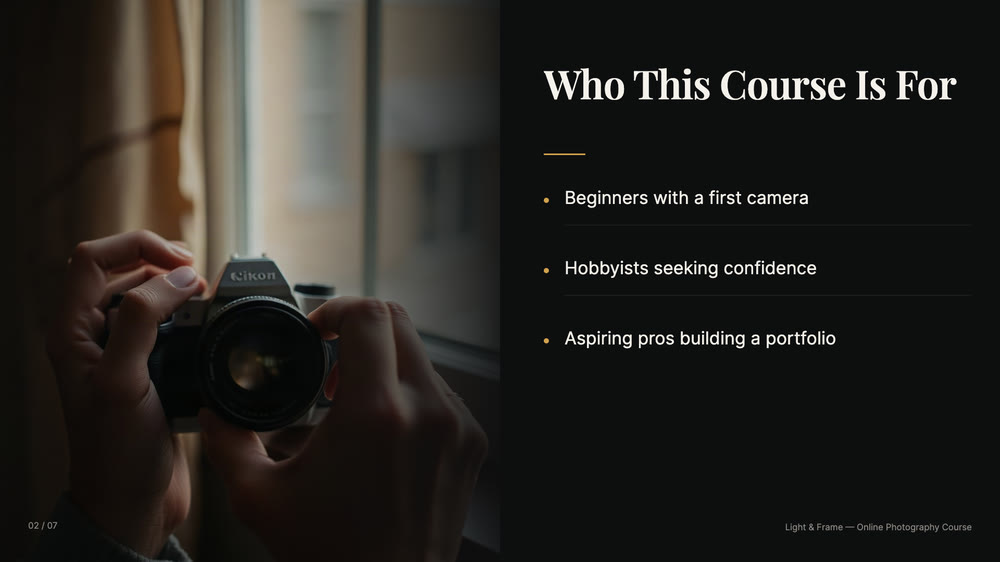
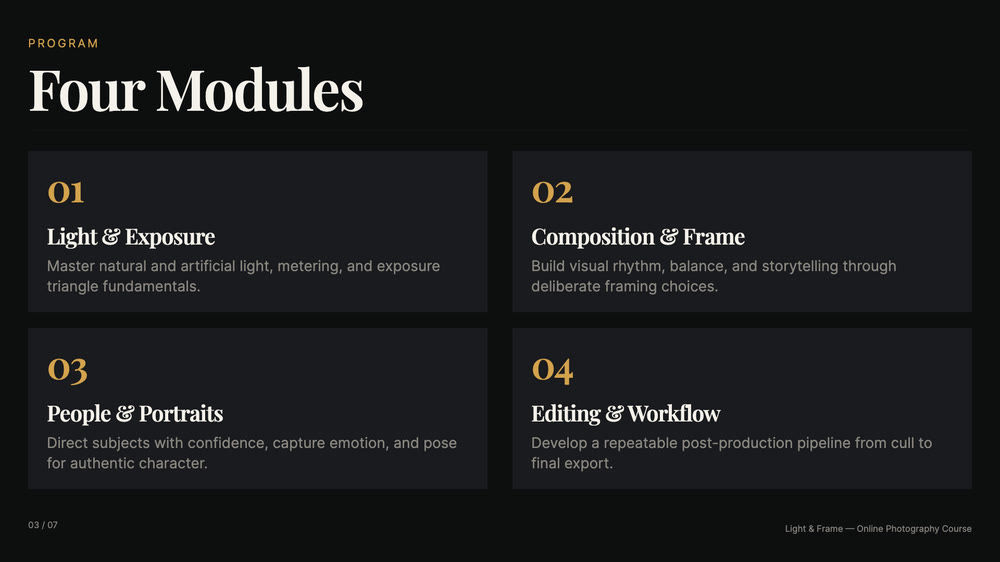
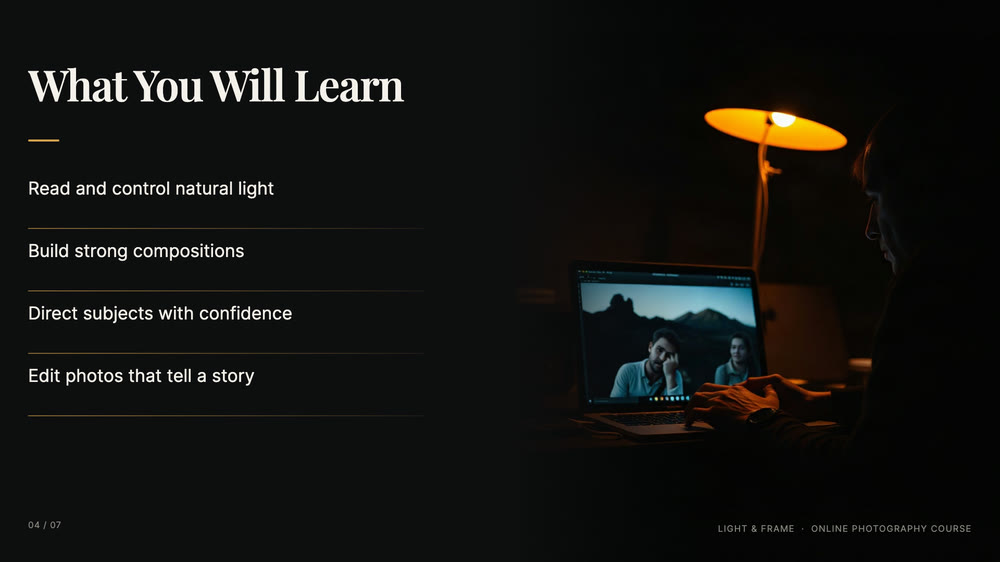
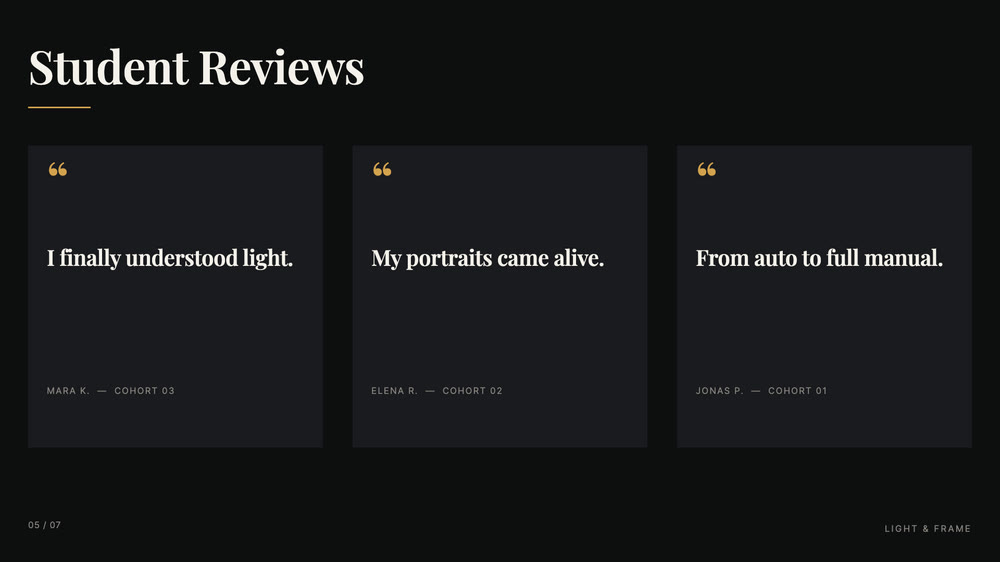
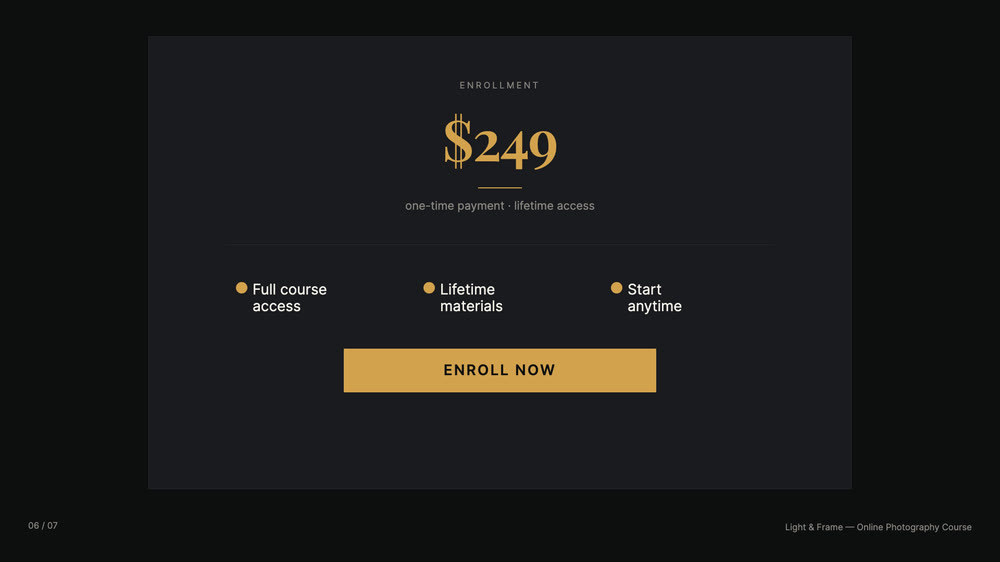
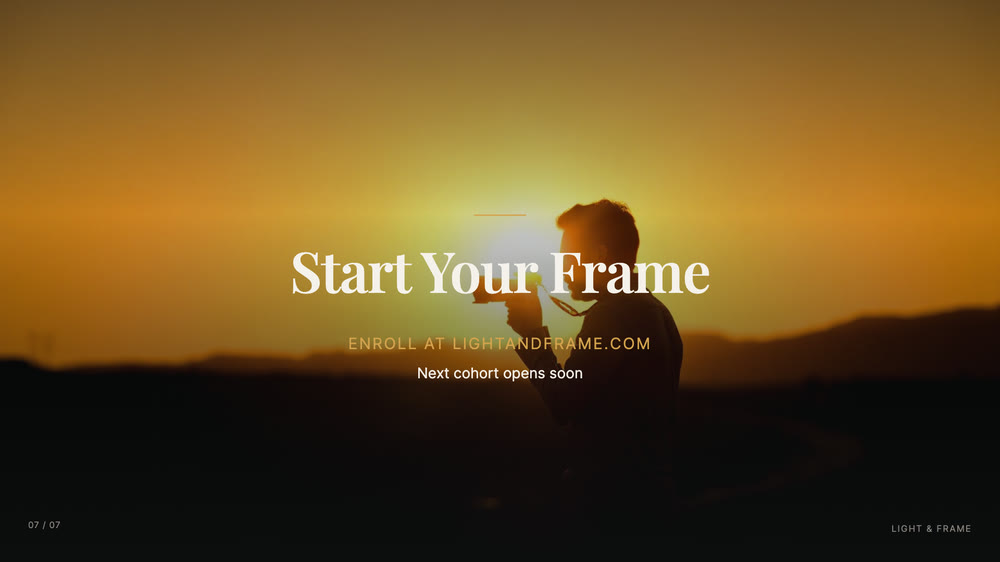
Deck for the online photography course “Light & Frame”: a cover with the name, who the course is for, a program of four modules, what you will learn, student reviews, price and enrollment
Seven slides on the same brief: the service split the topic into blocks of meaning on its own — from “who it's for” to enrollment.
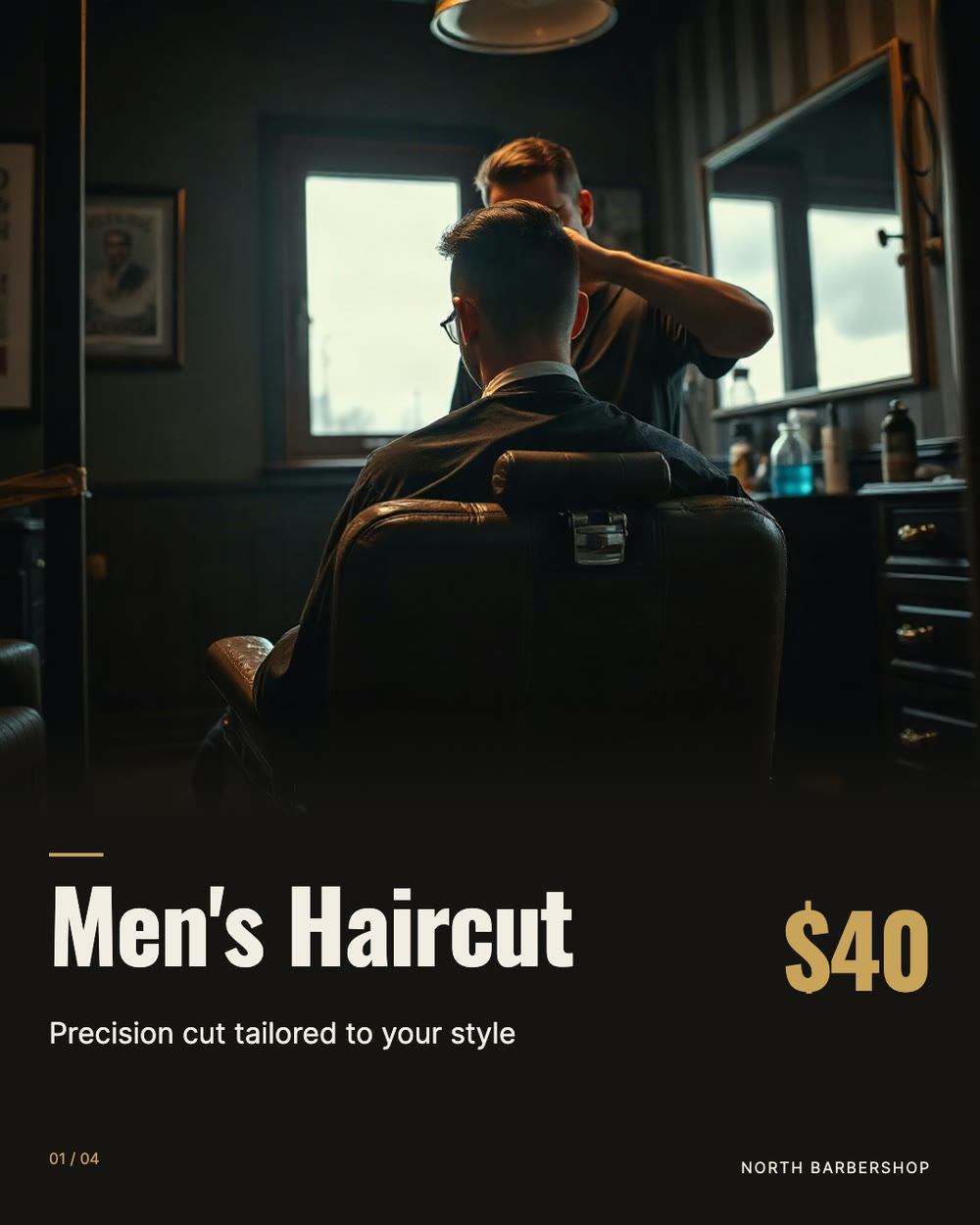
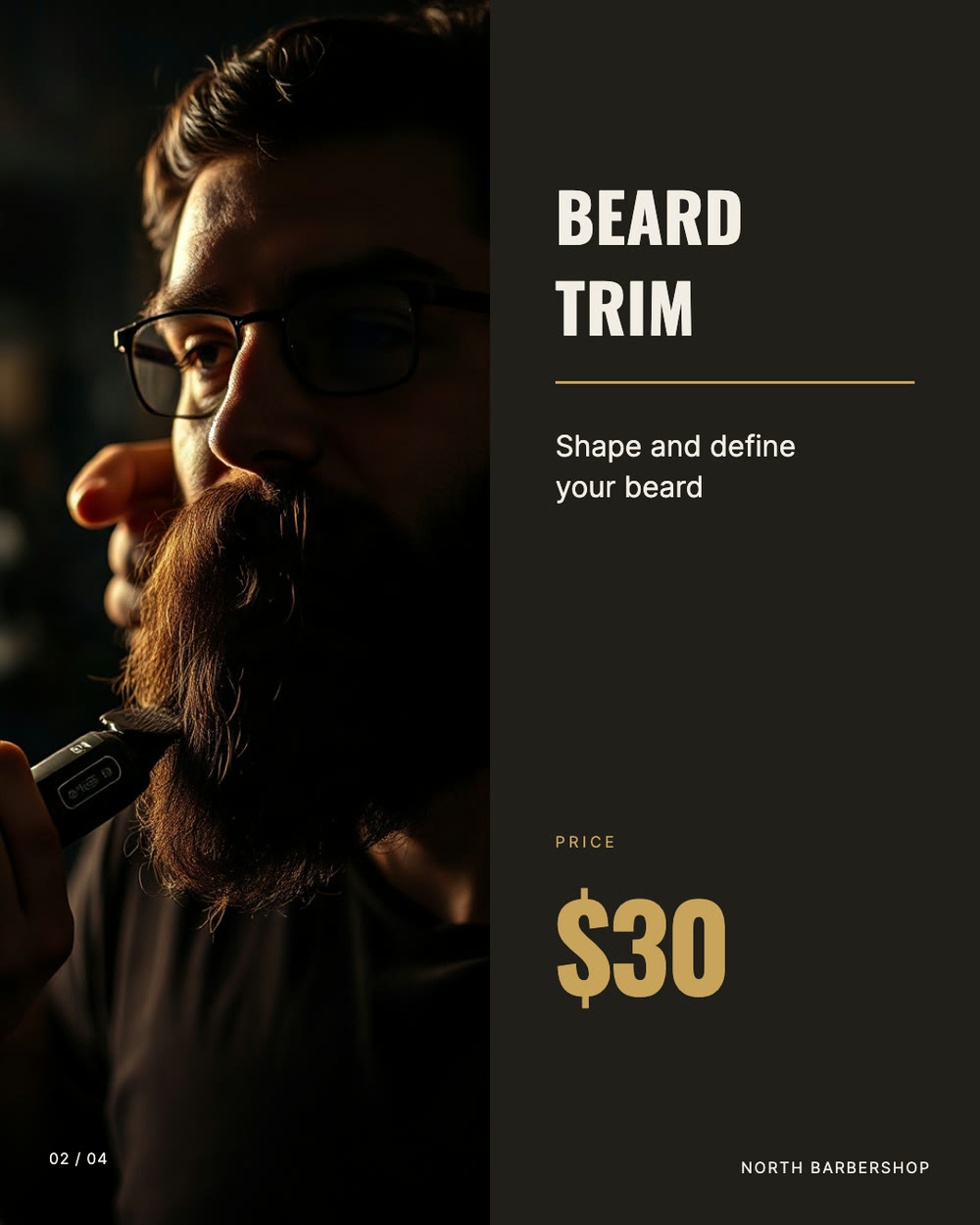
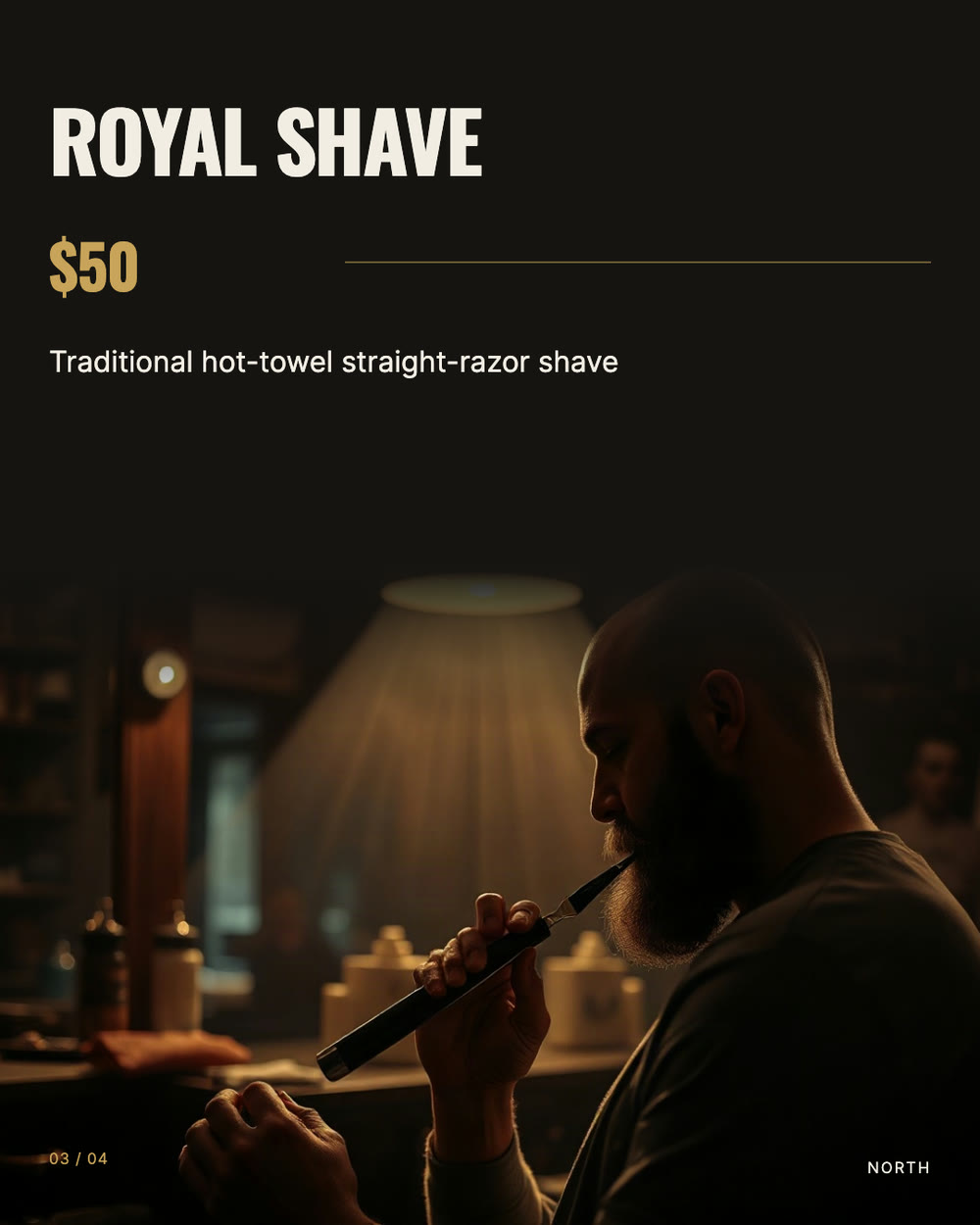
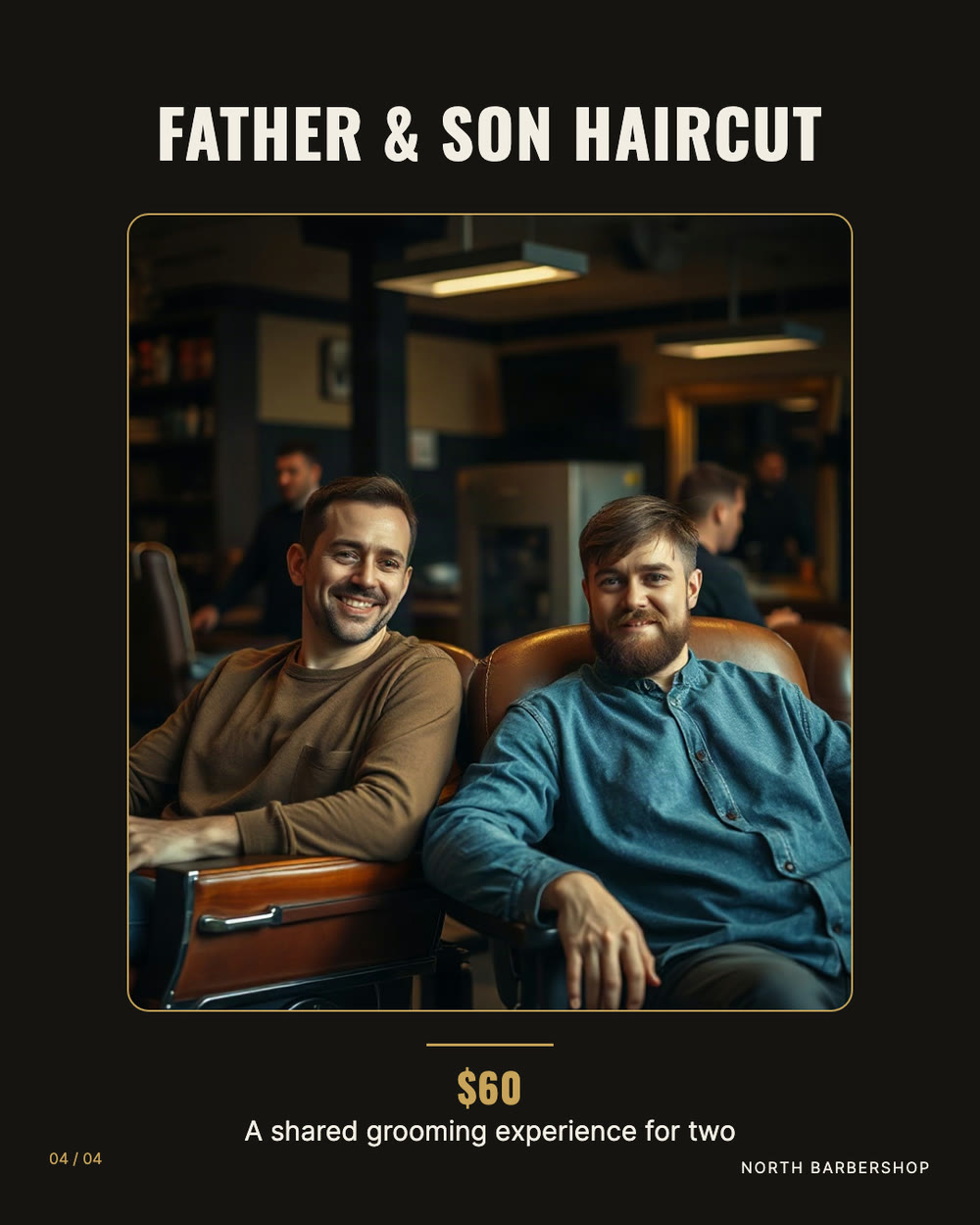
Set of 4 service cards for the NORTH barbershop: men's haircut $40, beard trim $30, royal shave $50, father & son haircut $60. Each with a name, a short description, the price and an atmospheric photo
A price list laid out as cards: one structure for all four, while the shot and the accent differ on each.
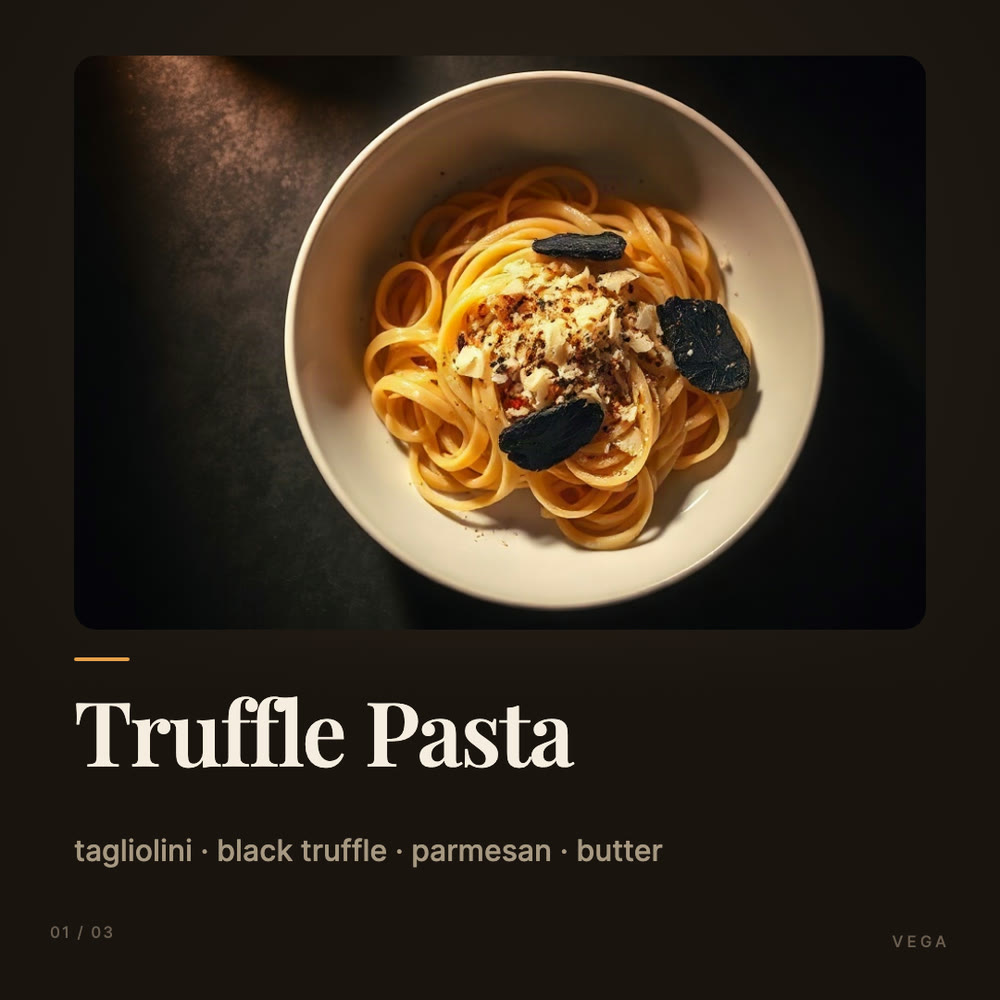
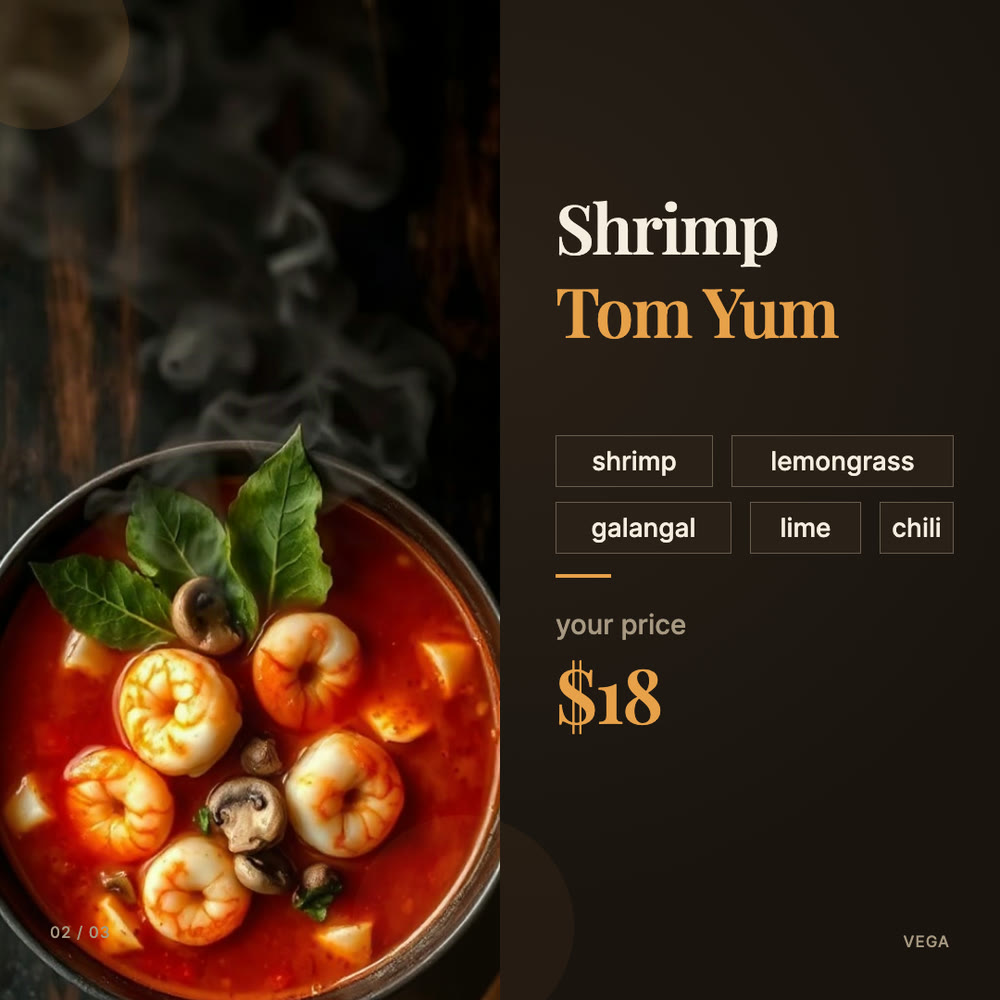
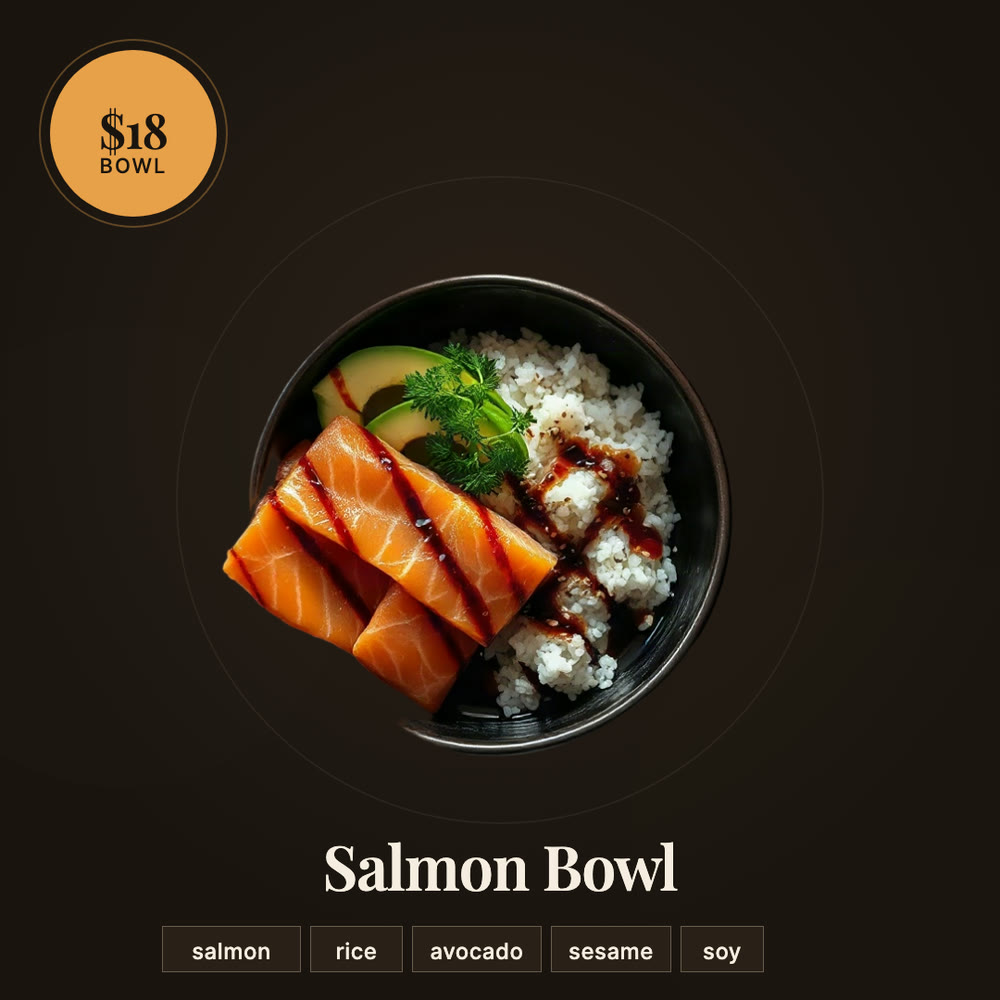
Set of 3 cards for the VEGA food delivery: truffle pasta, shrimp tom yum, salmon bowl. Each card with an appetizing photo of the dish, name, ingredients and price. Unified style, warm dark background
Items of the same kind are the case where a shared structure is right: the service keeps it and changes only the content.
What the service does for you
From a brief to a finished layout — one button. Here is what happens inside in the meantime.
Picks the canvas size
The brief makes it clear that stories are vertical and a presentation is horizontal. You can also set the size yourself — from 64 to 4096 pixels on each side.
Draws the missing images
Photos, textures and product shots are generated for the specific layout and land in their places right away — no stock hunting or cropping.
Works with your photos
Attach up to eight shots: a product, a portrait, an interior. The service describes them, places them in the layout and cuts out the background when needed.
Checks the geometry
The finished layout is measured on a real renderer: if text lands on text or a plate covers a caption, the layout goes back for a re-layout before you ever see it.
How to get a design from a description
The whole path — from an empty field to a layout you can download or refine
- 1
Sign up for SUPA — generation is available right after you confirm your email
- 2
Describe the task in your own words: what the layout is, who it's for, what texts and numbers should be on it, in what mood
- 3
If needed, attach your own photos — a product, a portrait, an interior — or a design sample to take the style from
- 4
Wait: a single layout takes 20–30 seconds, a series of five or six slides — 50–90
- 5
Open the result in the editor and polish it: texts stay texts, images stay separate objects, everything can be moved and changed
How to describe the task to get a good layout
A prompt is a brief, not a spell. The clearer you'd explain the task to a human designer, the better the AI understands it too. Below is what noticeably moves the result.
Name the medium
“A story”, “a poster”, “a marketplace product card”, “a podcast cover”, “a business card”, “a deck” — the medium picks the canvas proportions and the composition. It is the strongest word in the prompt.
Give specifics, not generalities
Names, dates, prices, promo codes and phone numbers go into the layout verbatim. “20% off with the promo code LAVENDER” becomes a finished plate, while “make something pretty about coffee” becomes a set of generic words.
Describe the mood and the palette
“Warm pastel palette”, “strict dark background with a lime accent”, “elegant classic typography” — that's enough to set the tone. Exact colors are understood too.
Say so if you need a series
The words “deck”, “carousel”, “set of cards”, “series” switch on the multi-layout mode. You can name an exact number too: “an eight-slide deck”, “four cards”.
Decide why you attach a photo
By default an attached shot is content: it goes into the layout. But write “in the style of the attached”, “like this sample”, “make the same one” — and the picture becomes a design sample: its palette, typography and arrangement are taken, and the picture itself stays out.
Don't ask for a picture instead of a layout
“Draw a photo of a kraft box” or “remove the background from this shot” are jobs for other tools: image generation and background removal. This one assembles a design — a layout with layers, texts and structure.
Frequently asked questions about design generation
How is this different from generating a picture with AI?
A picture arrives as one flat file, and you can't rewrite a word on it. Here you get a layout: the headline stays text, the photo stays a separate object, the plate stays a shape. All of it opens in the editor and edits like a regular project.
How long does the generation take?
A single layout — 20–30 seconds. A series of five or six slides — 50–90 seconds: the slides are laid out in parallel, so the time grows slower than their number.
Can I fix the result without redoing everything?
Yes. Describe the edit in words — “make the headline bigger”, “darken the background”, “replace the text on the second slide” — and it applies to the right slides while the rest stay untouched. Or just open the layout in the editor and move things by hand.
Can I use my own photos?
Yes, up to eight at a time. They are described, distributed across the slides and placed into the layout; the background is cut out when needed. The product in your shot is not swapped for a generated one — it's the very same object.
What sizes can I get a layout in?
Any: from 64 to 4096 pixels on each side. Set the size yourself, or leave it to the brief — stories come out vertical, a deck horizontal, a marketplace card square.
Do elements ever overlap each other?
Before it ships, the layout is measured on a real renderer — by the rectangles of the letters, not the declared coordinates. If it finds text under text, text under an opaque plate or a rule crossing the letters, the layout goes back for a re-layout with the exact list of problems.
What language should the prompt be in?
Any language — the texts in the layout come out in the language of your brief. Every example on this page was generated from the English prompts printed under the layouts.